The Royal Mews
London, United Kingdom

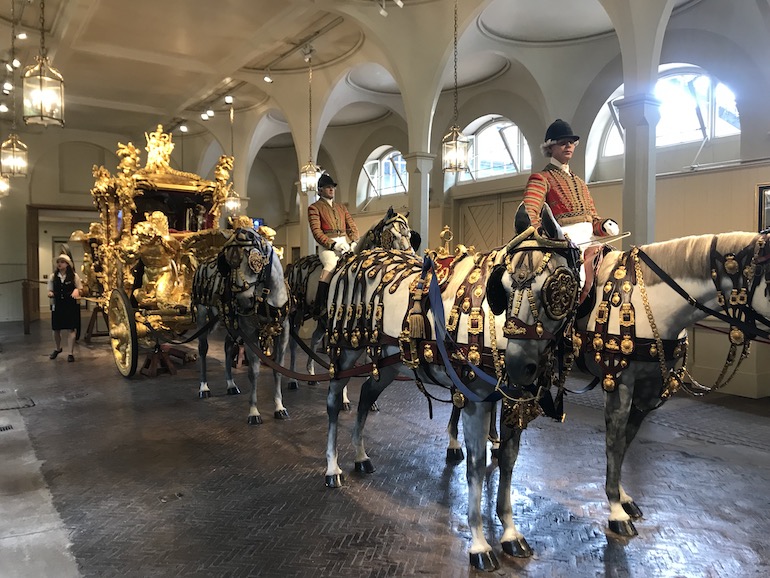
Explore The Royal Mews, Buckingham Palace, London, a historic working stable and home to royal carriages, horses, and state cars. Discover centuries of royal transport.
<h2>Overview</h2><p>Tucked away within the grounds of Buckingham Palace in London, The Royal Mews offers a captivating glimpse into centuries of royal transportation. Far from a mere museum, it is a bustling, working stable and garage, integral to the daily operations of the British monarchy. Responsible for all road travel arrangements for the King and members of the Royal Family, the Mews houses an impressive collection of historic carriages, ceremonial horses, and state motor cars. It is one of the finest working stables in existence, where tradition and pageantry are maintained with meticulous care and precision. Visitors are invited to explore this unique establishment for much of the year, offering an intimate look at the vehicles and animals that play a pivotal role in grand state occasions and daily royal life.</p><h2>History & Cultural Background</h2><p>The origins of the 'mews' concept date back to the 14th century, long before its current location. Initially, the term referred to the royal hawk houses at Charing Cross, where falcons were kept during their moulting ('mewing') period. Following a devastating fire in 1534, King Henry VIII rebuilt the Charing Cross mews as stables for his horses, yet the historical name persisted. The royal stables remained at this site until the early 19th century. In the 1820s, during the reign of George IV, the Royal Mews found its permanent home within the Buckingham Palace grounds, redesigned by the renowned architect John Nash, who also oversaw significant renovations to the Palace itself. Over the centuries, the Mews has adapted to changing times. While once exclusively focused on horse-drawn transport, it now seamlessly integrates modern state motor cars, reflecting the evolution of royal travel. Its enduring presence underscores the monarchy's deep connection to both tradition and progress.</p><h2>What Makes It Special</h2><p>What truly sets The Royal Mews apart is its status as a living, breathing institution. It is not merely a static exhibition but an active department of the Royal Household where grooms, coachmen, and chauffeurs live and work. The Mews is home to the magnificent Gold State Coach, a resplendent, 260-year-old vehicle gilded with 22-carat gold leaf and adorned with intricate sculptures. This iconic coach has been used for every coronation since George IV's in 1821 and is a highlight for visitors. Alongside it are other remarkable carriages, such as the more modern Diamond Jubilee State Coach, featuring contemporary comforts like electric windows and heating, and the Glass Coach, famously used for royal weddings. The Mews also houses the Royal Family's state motor cars, including bespoke Bentleys and Rolls-Royces. Equally captivating are the resident horses: the majestic Windsor Greys and the hardy Cleveland Bays. These specially bred and rigorously trained horses are central to royal processions, with the Greys requiring daily washing to maintain their pristine appearance.</p><h2>Stories, Fun Facts & Local Details</h2><p>The very name 'Mews' holds a charming historical anecdote, derived from the French word 'muer,' meaning 'to moult,' harking back to the time when royal falcons shed their feathers at the original Charing Cross location. This unique legacy highlights the unexpected evolution of the site from bird enclosure to grand stables. During Queen Victoria's reign, a school was established within the Mews for the children of the staff, emphasizing the close-knit community that has historically resided here. To this day, staff and their families continue to live on site, contributing to its 'working village' atmosphere. The Royal Mews is also responsible for the intensive training of the horses, ensuring they are perfectly prepared for their ceremonial duties. A fascinating detail for those with a green thumb is that the horse manure from the Mews is used to fertilize the gardens at Buckingham Palace. Visitors might also spot the charming miniature carriages, including a Donkey Barouche made as a Christmas present for Queen Victoria's children, adding a touch of whimsical history to the collection.</p><h2>Visitor Perspective</h2><p>A visit to The Royal Mews offers a truly immersive experience, standing in contrast to the grand, but sometimes distant, view of Buckingham Palace itself. Unlike the Palace's State Rooms, which open only seasonally, the Mews is accessible to the public for much of the year, providing a consistent opportunity to engage with royal history. Upon entering, visitors can utilize multimedia guides, often with special family-friendly versions, or join guided tours to deepen their understanding of the historic coaches, the role of the Mews, and the dedicated staff. Interactive elements enhance the experience, allowing guests to sit in a replica carriage, imagine themselves as part of a royal procession, or even practice 'tacking up' a wooden pony. While seeing the famous Windsor Greys and Cleveland Bays is often a highlight, their presence in the stables depends on their daily schedule, as they are working animals. The Mews is fully accessible, making it an inclusive destination for all curious travelers. Situated conveniently close to Buckingham Palace, it offers a tangible connection to the pageantry and tradition that define the British monarchy.</p>
Location
Coordinates: -0.140634, 51.501476
View on Google Maps