Buckingham Palace
London, United Kingdom

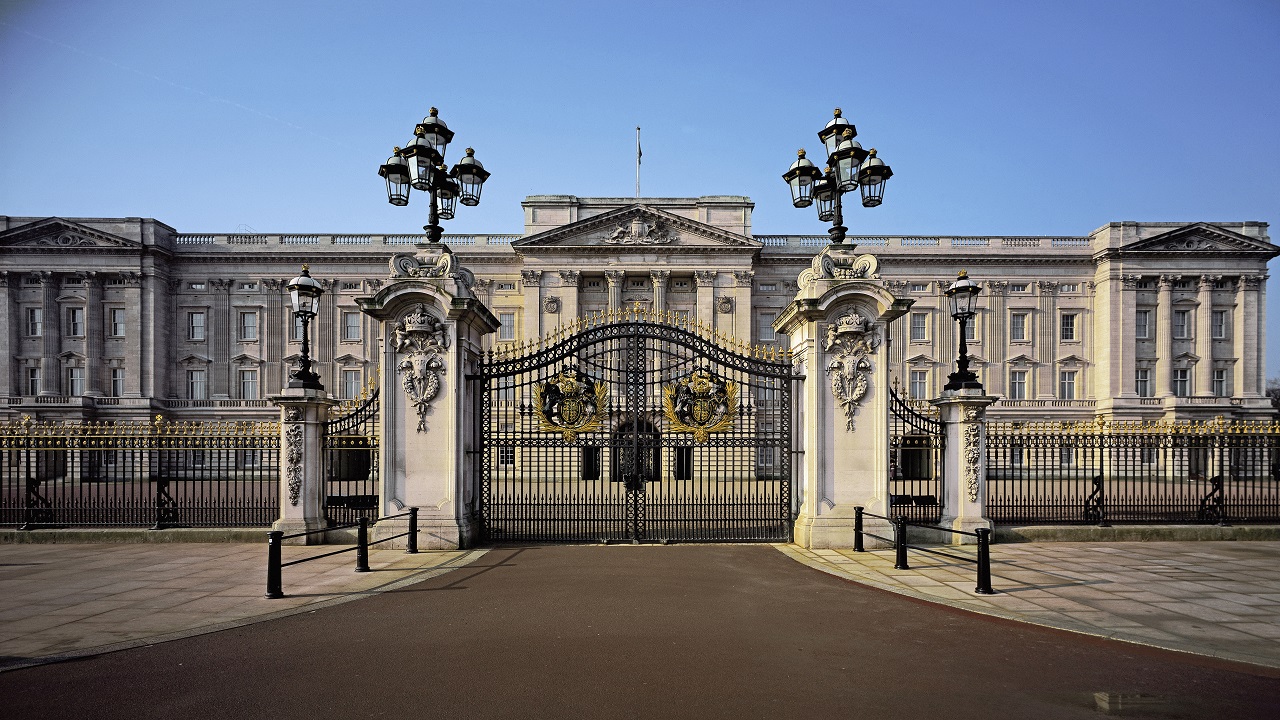
Explore Buckingham Palace, the iconic London residence of the UK's monarch. Discover its rich history, state rooms, and royal traditions in the heart of the United Kingdom.
<h2>Overview</h2><p>Buckingham Palace, an emblem of the British monarchy, stands majestically in the City of Westminster, London, United Kingdom, serving as the official residence and administrative headquarters of the UK monarch. This grand edifice is not merely a residence but a working palace, central to countless state occasions, royal hospitality, and national celebrations. Encompassing an impressive 775 rooms, it features 19 State Rooms, 52 royal and guest bedrooms, 188 staff bedrooms, 92 offices, and 78 bathrooms. Beyond its imposing architecture, the palace is surrounded by extensive grounds spanning approximately 39-40 acres, boasting London's largest private garden. While a symbol of enduring tradition, parts of Buckingham Palace, including its State Rooms and sections of the garden, open their doors to visitors during the summer months, offering a unique glimpse into royal life and history.</p><h2>History & Cultural Background</h2><p>The origins of Buckingham Palace trace back to 1703, when it was initially constructed as a large townhouse known as Buckingham House for John Sheffield, the Duke of Buckingham. Its royal connection began in 1761 when King George III acquired it for his wife, Queen Charlotte, transforming it into 'The Queen's House'. Over the subsequent decades, particularly in the early 19th century, the building underwent significant enlargement and architectural redesign under the vision of architects John Nash and Edward Blore, evolving into the magnificent palace we recognize today. A pivotal moment arrived in 1837 with the accession of Queen Victoria, who made Buckingham Palace the official London residence of the British monarch, a role it has maintained ever since. The iconic East Front, featuring the famous balcony, was a later addition, with its present facade famously redesigned by Sir Aston Webb in 1913. The palace's resilience was notably tested during World War II, enduring nine bombing raids; King George VI and Queen Elizabeth (the Queen Mother) famously refused to evacuate, reinforcing the palace's image as a steadfast symbol of national unity.</p><h2>What Makes It Special</h2><p>Buckingham Palace transcends its physical form to stand as a profound symbol of British identity, representing continuity, discipline, elegance, and duty. It serves as the epicentre for crucial national moments, hosting state visits, royal weddings, jubilees, investitures, and weekly audiences between the monarch and the Prime Minister. The world-renowned balcony, a feature of the East Front, is where the Royal Family gathers to greet crowds during significant national celebrations and moments of collective reflection. Within its walls lies the Royal Collection, an extensive and globally significant assemblage of art and historical objects, offering a vivid chronicle of royal tastes spanning centuries. Visitors are drawn to witness the precision and pageantry of the Changing the Guard ceremony, a spectacle that embodies centuries of British military tradition and is a highlight for many. The palace continually bridges its rich historical legacy with its ongoing function as a vital administrative hub for the modern monarchy.</p><h2>Stories, Fun Facts & Local Details</h2><p>Beyond its public facade, Buckingham Palace operates much like a self-contained 'mini-village'. It is remarkably equipped with its own post office, a cinema, a police station, a clinic, and even an ATM, catering to the needs of its residents and hundreds of staff. A curious historical footnote reveals that in the early 17th century, King James I attempted to establish a silk industry by planting mulberry trees in what are now the palace gardens, aiming to rear silkworms; however, the venture was unsuccessful as he chose the wrong species of mulberry. A unique distinction belongs to Edward VII, the eldest son of Queen Victoria, who holds the record as the only monarch to have been both born and died within the walls of Buckingham Palace. Former monarch Queen Elizabeth II was famed for her summer garden parties, where thousands of guests enjoyed refreshments, including an astonishing number of sandwiches. The palace's commitment to precision extends to its more than 350 clocks and watches, which are meticulously maintained and wound weekly by a dedicated team of horological conservators.</p><h2>Visitor Perspective</h2><p>For those eager to step inside this iconic landmark, the State Rooms of Buckingham Palace are typically opened to the public during the summer months, usually spanning from July through September. Given the palace's popularity, securing tickets in advance is highly recommended due to the timed admission slots and considerable demand. A visit offers a self-guided tour through the lavishly furnished State Rooms, where visitors can admire exquisite art and treasures from the Royal Collection, before concluding with access to parts of the picturesque palace garden. It's important to note that photography is generally not permitted inside the palace to preserve the collections and ensure visitor flow. Beyond the palace interiors, the Changing the Guard ceremony remains a popular and free public spectacle that draws crowds to the forecourt. For those interested in other facets of royal heritage, the Royal Mews, home to historic carriages and stables, and The King's Gallery, showcasing rotating exhibitions from the Royal Collection, are located within the palace site and often have longer opening seasons, offering separate visitor experiences.</p>
Location
Coordinates: -0.140634, 51.501476
View on Google Maps