Marble Inscriptions and Medical Diagrams
Bangkok, Thailand

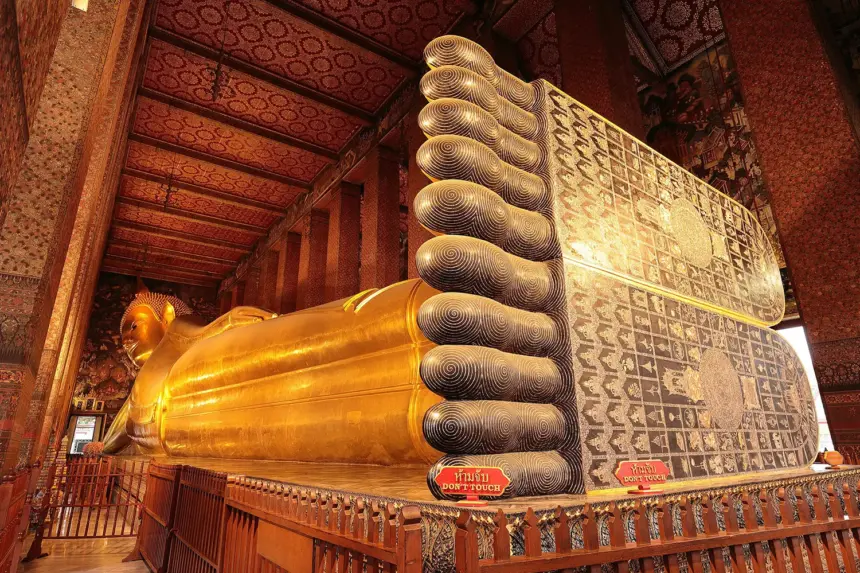
Explore Wat Pho's Marble Inscriptions and Medical Diagrams in Bangkok, Thailand – an ancient 'open university' preserving traditional Thai medicine and massage wisdom.
<h2>Overview</h2><p>Within the venerable grounds of Wat Pho in Bangkok, Thailand, lies a truly unique historical and cultural treasure: the Marble Inscriptions and Medical Diagrams. Far more than mere decorative elements, these etched stone tablets represent a profound, ancient repository of knowledge, earning Wat Pho the unofficial title of Thailand's first public university. They offer an immersive glimpse into traditional Thai wisdom, particularly its holistic approaches to health and well-being. Visitors walking through the temple complex discover these meticulously carved inscriptions and vibrant diagrams, revealing centuries of accumulated insight into traditional Thai medicine and massage.</p><p>This remarkable collection has been recognized globally, with its epigraphic archives inscribed on UNESCO's Memory of the World Register for the Asia and the Pacific region in 2008 and then internationally in 2011. These inscriptions serve as a cornerstone of Thai cultural heritage, openly sharing intellectual traditions that shaped a nation's understanding of body, mind, and spirit.</p><h2>History & Cultural Background</h2><p>The genesis of these vital inscriptions dates back to the early 19th century. Although Wat Pho itself has roots in the Ayutthaya period, its extensive renovation and expansion under King Rama III (1824–1851) transformed it into a center for public education. The King, committed to preserving and disseminating Thai knowledge for future generations, commissioned scholars and royal physicians to compile a vast array of texts. These texts covered not only Buddhist precepts and literary works but crucially, traditional Thai medicine and yoga postures.</p><p>More than 1,300 marble slabs were meticulously inscribed and placed around the temple's ceremonial halls and pavilions. Among these, nearly half are dedicated to medical and massage texts, complemented by striking illustrations. This initiative was revolutionary, transforming a royal temple into an accessible library, ensuring that this invaluable wisdom was not lost but rather made available to all who sought it. The knowledge enshrined here also finds its philosophical roots in figures like Jivaka Komarabhacca, believed to be the personal physician to the Buddha and revered as the father of Thai medicine.</p><h2>What Makes It Special</h2><p>What sets the Marble Inscriptions and Medical Diagrams apart is their role as a comprehensive, open-air encyclopedia of traditional Thai healing arts. They meticulously detail the principles of Thai traditional medicine, which views health as a balance of four elements: earth, water, wind, and fire. The inscriptions illuminate intricate herbal medicine recipes, specific therapeutic techniques, and an understanding of human anatomy focused on 'Sen lines' – the energy pathways vital to Thai massage.</p><p>Out of the extensive collection, 380 specific plates, containing 1,061 traditional remedies, have been recognized by the Public Health Ministry as national textbooks for traditional Thai medicine. This collection covers diverse medical knowledge, from general health and herbal treatments to specialized areas like pregnancy, childbirth, and pediatric care. The visual appeal of the medical diagrams, often larger and more prominent than those found in traditional manuscripts, makes them particularly engaging and memorable for visitors.</p><h2>Stories, Fun Facts & Local Details</h2><p>Wat Pho's renown as Thailand's 'first university' stems from this innovative approach to public education, predating formal institutions by centuries. King Rama III's vision was to create a learning hub where knowledge was freely accessible to common people, a concept truly ahead of its time.</p><p>A fascinating aspect of the inscriptions is the 'Ruesi Datton', or the Hermit's Self-Stretching exercises. These are yoga-like postures demonstrated by statues within the temple grounds, believed to have been developed by ancient hermits for self-care and healing. These postures, along with the detailed massage diagrams showing pressure points, form the theoretical bedrock of what is internationally known as traditional Thai massage.</p><p>Today, the Wat Pho Thai Traditional Medical and Massage School, established in 1955, continues this legacy. It's Thailand's first Ministry of Education-approved school of Thai medicine, and it attracts students from around the world eager to learn the authentic techniques passed down through these very inscriptions.</p><h2>Visitor Perspective</h2><p>For the curious traveler, encountering the Marble Inscriptions and Medical Diagrams at Wat Pho is an experience that transcends mere sightseeing. It's an opportunity to connect with a living heritage of healing and wisdom. As you wander through the temple's cloisters and pavilions, you'll find these ancient texts integrated into the very architecture, turning a visit into an educational journey.</p><p>Observing the detailed diagrams of energy lines and traditional remedies, one can almost feel the historical weight of knowledge being passed down through generations. To deepen the experience, visitors can even receive a traditional Thai massage directly on the temple grounds, performed by practitioners trained at the Wat Pho school. This allows for a tangible connection to the theories and practices preserved in the marble, offering not just intellectual understanding but also a direct, physical appreciation for this enduring cultural legacy. It's a rare chance to engage with a place where history, health, and spirituality are so deeply intertwined.</p>
Location
Coordinates: 100.49361, 13.74639
View on Google Maps