Vaulted Ceiling & Brick Arches
Istanbul, Turkey

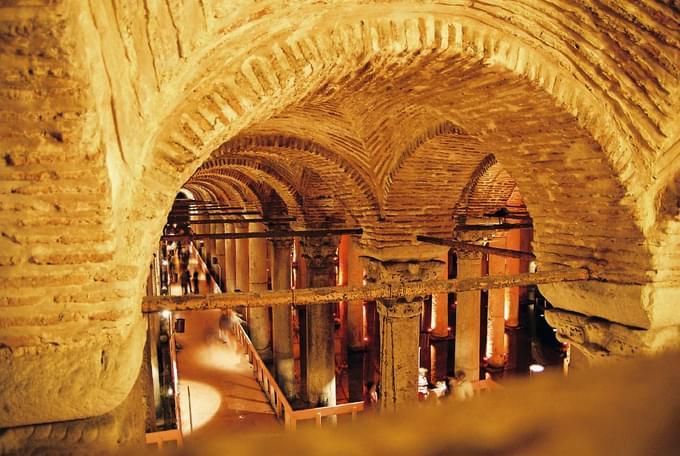
Explore the historic vaulted ceilings and brick arches of Istanbul's Basilica Cistern, a marvel of 6th-century Byzantine engineering in Turkey.
<h2>Overview</h2><p>Deep beneath the bustling streets of Istanbul, Turkey, lies the magnificent Basilica Cistern, locally known as Yerebatan Sarnıcı or 'Sunken Palace'. This subterranean marvel, a testament to Byzantine engineering, captivates visitors with its vast, dimly lit expanse. Among its most striking features are the intricate vaulted ceilings and the robust brick arches that stretch across the 'underground forest' of columns, creating a truly atmospheric and almost otherworldly experience. The Basilica Cistern is the largest of several hundred ancient cisterns beneath Istanbul, built to supply water to the Great Palace of Constantinople. Its architecture, particularly the supporting roof structure, reveals ingenious construction techniques that have withstood centuries of time.</p><p>Stepping into the cistern feels like entering a submerged cathedral, where the soft illumination highlights the geometric precision of the arches and the gentle curve of the vaults. This architectural design is not merely decorative; it is a fundamental element that distributes the immense weight of the structure above onto the hundreds of columns below, ensuring the cistern's remarkable longevity and stability. The interplay of light and shadow, combined with the reflections on the shallow water, draws one's gaze upwards, inviting contemplation of the ancient craftsmanship.</p><h2>History & Cultural Background</h2><p>The Basilica Cistern's construction dates back to the 6th century AD, during the reign of the powerful Byzantine Emperor Justinian I (527–565 AD). Following the destructive Nika riots of 532 AD, which devastated much of Constantinople, Emperor Justinian embarked on an ambitious rebuilding program. The cistern was a crucial part of this effort, designed to provide a reliable and abundant water supply to the Great Palace, imperial residences, and other significant buildings, especially vital during sieges or periods of drought.</p><p>The name 'Basilica Cistern' comes from the Stoa Basilica, a large public square and legal center that once stood above it on the First Hill of Constantinople. The construction involved a massive workforce, reportedly around 7,000 slaves, and utilized a practice known as 'spoliation,' where materials from older, ruined buildings were repurposed. This explains the diverse styles of the column capitals found within the cistern. The engineers meticulously designed the vaulted ceilings and brick arches as an integral part of this grand water management system, ensuring the structural integrity of the vast underground reservoir.</p><h2>What Makes It Special</h2><p>The vaulted ceilings and brick arches of the Basilica Cistern are more than just structural components; they are a masterpiece of Byzantine engineering and aesthetics. The weight of the cistern's roof is expertly transferred to the 336 marble columns below through these cross-shaped vaults and round arches. These vaults were often constructed using a 'monastery vault' technique, notably built without the use of temporary formwork, a testament to the skill of the Byzantine builders.</p><p>The entire roof structure, including the arches and sides, is made of brickwork sealed with a waterproof terrass, a type of mortar, demonstrating an advanced understanding of hydraulic engineering for its time. The walls themselves are nearly five meters thick and plastered with a special 'Horasan harcı,' a resilient, waterproof mortar, to prevent any leakage. This intricate design created a stable, watertight, and enduring system for storing vast quantities of water, capable of holding up to 100,000 tons.</p><h2>Stories, Fun Facts & Local Details</h2><p>While the columns often capture the immediate attention of visitors, including the famous Medusa heads and the 'Weeping Column,' it's the overarching canopy of vaults and arches that provides the unifying structure and sense of enclosure. The harmonious repetition of these architectural elements, extending into the distant darkness, creates an illusion of endless space, leading many to describe it as a 'sunken palace' or an 'underground forest.'</p><p>The sheer scale of the project and the methods used have led to some intriguing theories. The vaulted ceilings were not only functional for supporting the roof but also played a role in channeling water efficiently throughout the cistern. The dim, atmospheric lighting that now graces the cistern enhances the mystery of these overhead structures, allowing visitors to appreciate the architectural patterns and the silent stories they tell of a bygone era. The precise arrangement of bricks in concentric squares leading to the crown of each vault showcases meticulous craftsmanship.</p><h2>Visitor Perspective</h2><p>As you traverse the wooden walkways within the Basilica Cistern, your gaze will inevitably be drawn upwards to the impressive vaulted ceilings and the network of brick arches. The sense of being enveloped by such ancient, robust architecture is profound. The gentle sound of dripping water, echoing softly in the vast space, further enhances the mystical ambiance. The vaulted structures contribute significantly to the cool, quiet atmosphere, offering a stark contrast to the vibrant city above.</p><p>Observing the consistent construction of these elements across the entire cistern provides insight into the Byzantine Empire's organizational capabilities and architectural prowess. It's an opportunity to appreciate not just the grandeur of the columns, but the engineering brilliance of the entire roof system that has protected and preserved this vital water source for over a millennium. The vaulted ceilings and brick arches are a subtle yet powerful reminder of the enduring legacy of Constantinople, inviting quiet reflection on the ingenuity required to build such an impressive underground sanctuary.</p>
Location
Coordinates: 28.97778, 41.00806
View on Google Maps