Tin Hau Temple
Hong Kong, China

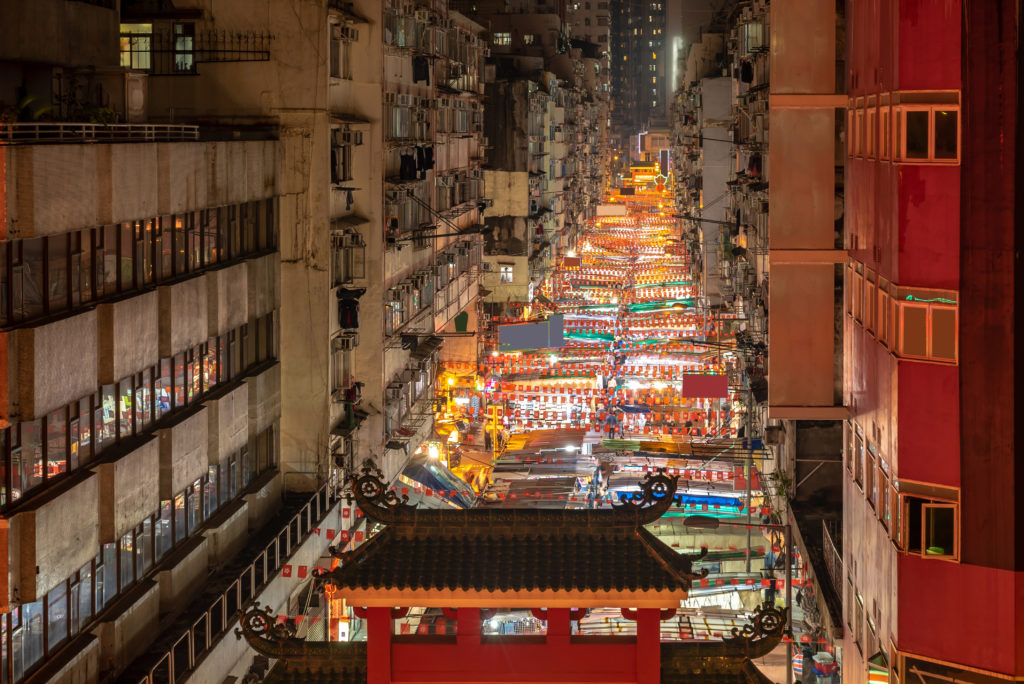
Discover the historic Tin Hau Temple, a serene cultural landmark nestled within the bustling Temple Street Night Market in Hong Kong, China. Explore its rich history and spiritual significance.
<h2>Overview</h2><p>Nestled within the vibrant bustle of Hong Kong's famous Temple Street Night Market, the Tin Hau Temple offers a serene sanctuary and a profound glimpse into the city's rich cultural and spiritual heritage. Dedicated to Tin Hau, the revered Goddess of the Sea, this ancient temple serves as a historical anchor in an area renowned for its lively evening bazaar. It's a place where the scent of incense mingles with the aromas of street food, creating a unique sensory experience for any curious traveler.</p><p>Far more than just a place of worship, the Tin Hau Temple in Yau Ma Tei is a significant cultural landmark, providing a spiritual heart to the surrounding community. Its presence explains the very name 'Temple Street', reflecting its enduring importance to the locale.</p><h2>History & Cultural Background</h2><p>The history of the Tin Hau Temple Compound in Yau Ma Tei stretches back to the late 19th century, with an earlier temple possibly built around 1865. The current temple was rebuilt at its present site in 1878, establishing itself as a crucial center for the community.</p><p>This compound is the largest surviving Tin Hau Temple complex in Kowloon, comprising five traditional Chinese buildings linked by interconnecting corridors. Beyond the main Tin Hau Temple, these include Kung Sor (Public Office), Fook Tak Tsz (another temple), and two Shu Yuen (colleges), which were added between 1894 and 1920.</p><p>The temple is dedicated to Tin Hau, also known as Mazu, a divine empress and goddess of the sea. According to legend, she was a mortal named Lin Moniang from Fujian Province who possessed miraculous powers to predict weather and rescue seafarers from peril. As a result, she became the patron saint of fishermen and all those whose lives were intertwined with the sea, a vital aspect of historical Hong Kong. In recognition of its historical and cultural value, the Tin Hau Temple Compound was declared a monument in Hong Kong in 2020.</p><h2>What Makes It Special</h2><p>The Tin Hau Temple's special allure lies in its multi-faceted role within the community throughout history. It was not only a spiritual beacon but also a hub for social services. In the past, the Kung Sor acted as a place for arbitrating disputes among residents, while the Shu Yuen provided free schooling for children of both boat people and land dwellers, supported by temple donations.</p><p>Architecturally, the temple is a fine example of Qing dynasty vernacular design, featuring a two-hall-three-bay layout. Visitors can admire intricate details such as Shiwan ceramic decorations, auspicious animals, and painted murals depicting Chinese folk stories on its facade. Inside, precious historic relics are preserved, including a stone lion from the Qing Tongzhi period (1865) and a copper bell cast in 1888.</p><p>Adding to its uniqueness is its original location. While it now sits inland, the temple was once situated directly on the waterfront of Yau Ma Tei, serving as a guiding light for fishermen leaving for the open seas before extensive land reclamation transformed the coastline.</p><h2>Stories, Fun Facts & Local Details</h2><p>The legend of Tin Hau herself is deeply rooted in folklore. One popular story recounts how Lin Moniang, while in a trance, spiritually saved her father and brothers from a typhoon at sea. Though she managed to bring her father and one brother to safety, her mother woke her, causing her to lose grip of another brother. This tale underscores her powerful connection to maritime protection.</p><p>The open area directly in front of the temple, known locally as 'Yung Shu Tau' (Banyan Tree Head), has its own rich history. Shaded by lush banyan trees, this public square was historically a vital social gathering spot. In bygone days, it was a lively place where people socialized, played chess, and enjoyed street performances like juggling and storytelling as darkness fell. This tradition of evening entertainment foreshadowed the vibrant night market that now surrounds the temple, drawing fortune-tellers and opera singers.</p><p>Interestingly, the temple also played a charitable role; during the economic downturn of World War I, some of its funds were allocated to support Kwong Wah Hospital, highlighting its deep community integration.</p><h2>Visitor Perspective</h2><p>Visiting the Tin Hau Temple provides a tranquil contrast to the energetic Temple Street Night Market. As you step inside, the peaceful atmosphere and the soft glow of incense offer a moment of reflection away from the market's lively bartering and street performances. Travelers can observe local devotees offering prayers, burning incense, and engaging in traditional worship practices.</p><p>It's an opportunity to appreciate traditional Chinese architecture and the deep spiritual beliefs that underpin much of Hong Kong's culture. Take time to notice the intricate carvings, historic artifacts, and the overall design that speaks volumes about the past. The temple serves as a quiet reminder of Hong Kong's origins as a fishing village and the enduring faith of its people in the Goddess of the Sea, making it an essential stop for anyone seeking to understand the soul of this dynamic city.</p>
Location
Coordinates: 114.1693, 22.3087
View on Google Maps