The Silent Evolution
Cancún, Mexico

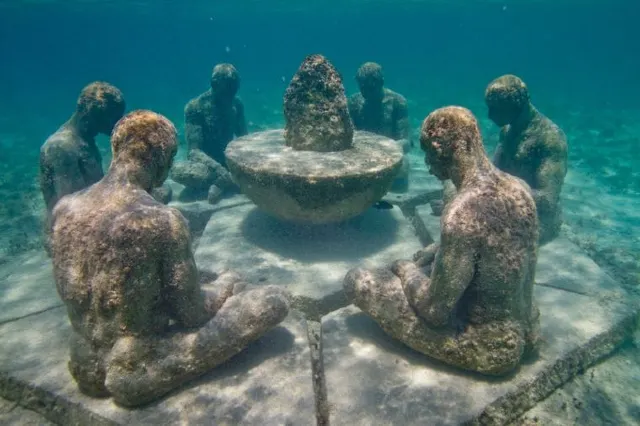
Explore 'The Silent Evolution' at Cancún Underwater Museum, Mexico. Over 400 human sculptures form a living reef, blending art and marine conservation.
<h2>Overview</h2><p>Deep within the mesmerizing turquoise waters of Cancún, Mexico, lies a profound testament to art, nature, and conservation: 'The Silent Evolution'. This remarkable sub-spot is a central and breathtaking installation within the larger Cancún Underwater Museum (MUSA), a visionary project located primarily in the Manchones gallery, just off the coast of Isla Mujeres. Comprising over 400 life-sized human figures, this aquatic tableau was meticulously crafted by the acclaimed British sculptor Jason deCaires Taylor. Submerged at a depth of approximately 8 to 10 meters (around 26 to 33 feet), 'The Silent Evolution' offers an immersive experience, best explored by those venturing beneath the waves.</p><p>Far more than just an art exhibition, 'The Silent Evolution' serves a critical ecological purpose. Each sculpture acts as an artificial reef, designed to foster coral growth and attract diverse marine life. It's a living, breathing artwork that evolves with the ocean, providing a sanctuary for aquatic organisms while simultaneously drawing human visitors away from the region's fragile natural coral reefs. This innovative blend of artistic expression and environmental stewardship makes 'The Silent Evolution' a truly unique and significant destination in the Caribbean.</p><h2>History & Cultural Background</h2><p>The genesis of 'The Silent Evolution' is deeply rooted in a pressing environmental concern. In the mid-2000s, the pristine natural reefs surrounding Cancún, particularly the Manchones Reef, faced immense pressure from burgeoning tourism, anchoring, and diving activities. To alleviate this stress and safeguard the delicate marine ecosystem, Dr. Jaime González Cano, Director of the National Marine Park, alongside Roberto Díaz Abraham of the Cancún Nautical Association, conceived the idea of an underwater museum in 2008.</p><p>Jason deCaires Taylor, a sculptor renowned for his eco-conscious underwater installations, was brought on board as the lead artist. His most ambitious work to date, 'The Silent Evolution', began installation in 2009 and was largely completed by the end of 2010, coinciding with MUSA's official opening in November of that year. The hundreds of figures that form the installation were cast from real members of the local fishing community, grounding the artwork deeply in the region's cultural and social fabric. These sculptures were specifically engineered from pH-neutral marine-grade cement, a material that actively encourages the colonization and growth of corals and other marine organisms, transforming inert statues into vibrant, living habitats.</p><h2>What Makes It Special</h2><p>'The Silent Evolution' stands apart as a masterpiece of eco-art. Its profound specialty lies in its dual function as both a captivating artistic display and a crucial ecological intervention. By creating new, complex reef structures, the installation effectively diverts a significant portion of the 750,000 annual visitors to the marine park away from the overstressed natural reefs, allowing them vital time to recover and regenerate.</p><p>The very name 'Silent Evolution' encapsulates its essence: the ongoing, quiet transformation of these human forms as marine life takes hold. Corals, sponges, and algae gradually cover the figures, blurring the lines between art and nature, and highlighting the resilience and regenerative power of the ocean. Furthermore, the strategic placement of the sculptures in an eye-like formation, downstream from natural reefs, is not merely aesthetic. This arrangement is designed to reduce the impact of hurricanes and intercept coral larvae during spawning, promoting the spread of new coral growth within the marine park.</p><h2>Stories, Fun Facts & Local Details</h2><p>The creation of 'The Silent Evolution' was a monumental undertaking, requiring over 18 months of intensive work. It involved the use of 120 tons of marine concrete and over 120 hours of intricate underwater labor. A fascinating aspect is that each of the over 400 figures is a direct cast of a real person from the local community, imbuing the installation with a powerful sense of collective identity and human presence. This personal connection is evident in individual sculptures, such as the stoic young girl Valeria Ramírez, immortalized holding her small bag and looking upwards with a serene smile. Another poignant pairing tells the story of a nun (modeled after Taylor's Spanish teacher) placed beside a pregnant woman, reflecting cycles of life and quiet transitions.</p><p>The artist's intention was for this underwater society to be slowly assimilated by marine life, offering a challenging metaphor for the future of humanity itself and its relationship with the natural world. The ever-changing surfaces, adorned with new marine growth, mean that 'The Silent Evolution' is perpetually evolving, offering a unique viewing experience with each visit.</p><h2>Visitor Perspective</h2><p>For the curious traveler eager to witness 'The Silent Evolution', the primary and most rewarding way to experience this submerged spectacle is through scuba diving. The installation's depth of 8 to 10 meters places it perfectly within typical recreational diving limits, allowing divers to swim amongst the figures and observe the intricate details and thriving marine ecosystems up close. Many tour operators in Cancún and Isla Mujeres offer guided diving excursions to MUSA's Manchones gallery.</p><p>While snorkeling can offer a glimpse of the sculptures from the surface, especially on clear days, the full impact and details are best appreciated by descending into their watery world. Glass-bottom boat tours are available for other shallower MUSA galleries, but for 'The Silent Evolution', the immersive experience of diving is unparalleled. Visitors are encouraged to observe but not touch the sculptures, allowing the delicate marine life to continue its natural growth undisturbed. The period from November to April typically offers the best visibility, promising a truly magical encounter with this underwater marvel.</p>
Location
Coordinates: -86.7996, 21.1916
View on Google Maps