The Last Column
New York, United States

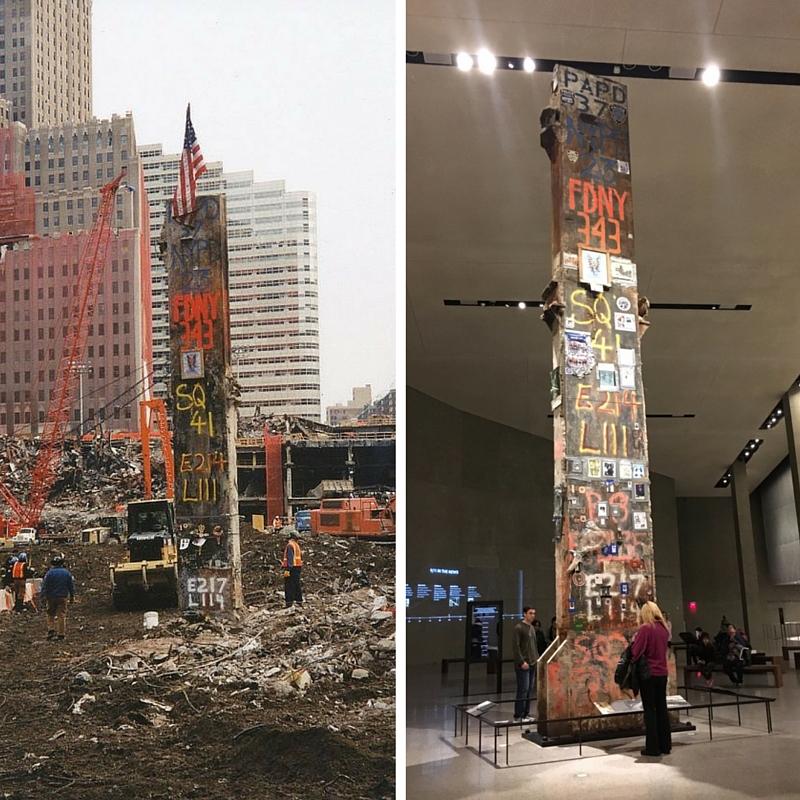
Explore 'The Last Column' at the 9/11 Memorial & Museum in New York, United States, a powerful symbol of resilience and remembrance.
<h2>Overview</h2><p>Deep within the National September 11 Memorial & Museum in New York, United States, stands 'The Last Column', a profoundly moving artifact that serves as a central symbol of resilience and remembrance. This immense steel beam, towering 36 feet tall and weighing 58 tons, was once part of the South Tower's core structure, specifically Column 1001B. It miraculously remained standing after the collapse of the Twin Towers, becoming the final piece of the World Trade Center to be removed from Ground Zero, marking the official end of the nine-month recovery effort.</p><p>Today, visitors can witness this powerful testament to human spirit, covered in thousands of personal messages, photographs, and tributes left by recovery workers, victims' families, and volunteers during the arduous cleanup. The column's presence in Foundation Hall provides a tangible link to the immediate aftermath of the attacks, encapsulating both the immense loss and the unwavering determination of a community united in grief and hope.</p><h2>History & Cultural Background</h2><p>Following the devastating attacks of September 11, 2001, the site of the World Trade Center became a monumental recovery zone. It was during this nine-month period that 'The Last Column' was uncovered. Initially, it even helped support a temporary haul road near the remnants of the South Tower's lobby.</p><p>Its significance grew as it stood near the last known location of many first responders, transforming it into a poignant marker of loss. The tradition of adorning the column began spontaneously in March 2002, when George Luis Torres of FDNY Squad 41 spray-painted 'SQ 41' on the beam. He did this to mark the area where his missing squad members were believed to be found, after discovering a tool belonging to his unit. This act of remembrance quickly inspired others; soon, various agencies like the NYPD and PAPD, along with countless individuals, began to cover the column with their own messages, insignia, memorial cards, and photographs.</p><p>The removal of 'The Last Column' on May 30, 2002, signified the formal conclusion of the recovery operations. This solemn occasion was marked by a public ceremony where the beam, draped in an American flag, was escorted from the site with an honor guard, bagpipers playing 'Amazing Grace,' and buglers performing 'Taps'. It was then transported to a hangar at JFK Airport for crucial conservation work to preserve its fragile adornments. In August 2009, 'The Last Column' returned to the World Trade Center site, where the 9/11 Memorial & Museum was literally constructed around it due to its monumental size.</p><h2>What Makes It Special</h2><p>'The Last Column' holds a unique place within the 9/11 Memorial & Museum as a powerful, unaltered artifact directly from the attack site. Its very existence, anchored into bedrock while the towers around it disintegrated, makes it a physical survivor and a profound symbol of endurance.</p><p>Standing as the centerpiece in Foundation Hall, its immense scale serves as a visceral reminder of the sheer size of the Twin Towers and the devastating magnitude of the event. What truly sets it apart, however, are the thousands of handwritten messages, union stickers, agency patches, and photographs that cover its surface. These deeply personal contributions transformed a structural beam into a collective memorial, echoing the voices and sentiments of those who lived through the tragedy and participated in the recovery. The meticulous effort to preserve every single marking ensures that each individual's grief, hope, and determination remains visible for future generations.</p><h2>Stories, Fun Facts & Local Details</h2><p>The stories etched onto 'The Last Column' offer a direct connection to the human experience of 9/11. Beyond George Luis Torres's initial 'SQ 41' marking, numerous other tributes emerged. One can find 'PAPD 37', acknowledging the 37 Port Authority Police Department members who died, 'NYPD 23', and 'FDNY 343', commemorating the 343 firefighters lost. Jennifer Spano, a Salvation Army volunteer who dedicated herself to the recovery effort, famously inscribed 'NYC forever strong' on the column on May 28, 2002, just before its removal. Even the 'Cigar Guys', Joseph Johnson and Herbert Minks, who offered chiropractic services and cigars to recovery workers, left their mark with unique stickers.</p><p>A significant detail is the painstaking conservation process undertaken to stabilize and preserve the column's surface and the myriad of attachments. To allow visitors to fully engage with these intricate details, even those high up on the 36-foot beam, the museum incorporates interactive touch-screen panels. These digital aids enable close-up exploration of individual messages and photographs, making every story accessible.</p><h2>Visitor Perspective</h2><p>Visiting 'The Last Column' is an intensely moving experience. It is often described as evoking powerful emotions, offering a tangible link to the events of 9/11 and the profound human response that followed. Standing before it, one can feel the weight of history and the collective spirit of a city and nation. The myriad of personal tributes makes the experience deeply intimate, allowing visitors to connect with individual stories of loss, courage, and solidarity.</p><p>This artifact encourages profound reflection on themes of resilience, community, and the enduring power of hope in the face of unimaginable tragedy. It stands not merely as a relic of destruction, but as a vibrant, living memorial, continually affirming the triumph of human dignity and the unwavering commitment to remember and honor those impacted by 9/11.</p>
Location
Coordinates: -74.013855, 40.711449
View on Google Maps