The Crown Jewels
London, United Kingdom

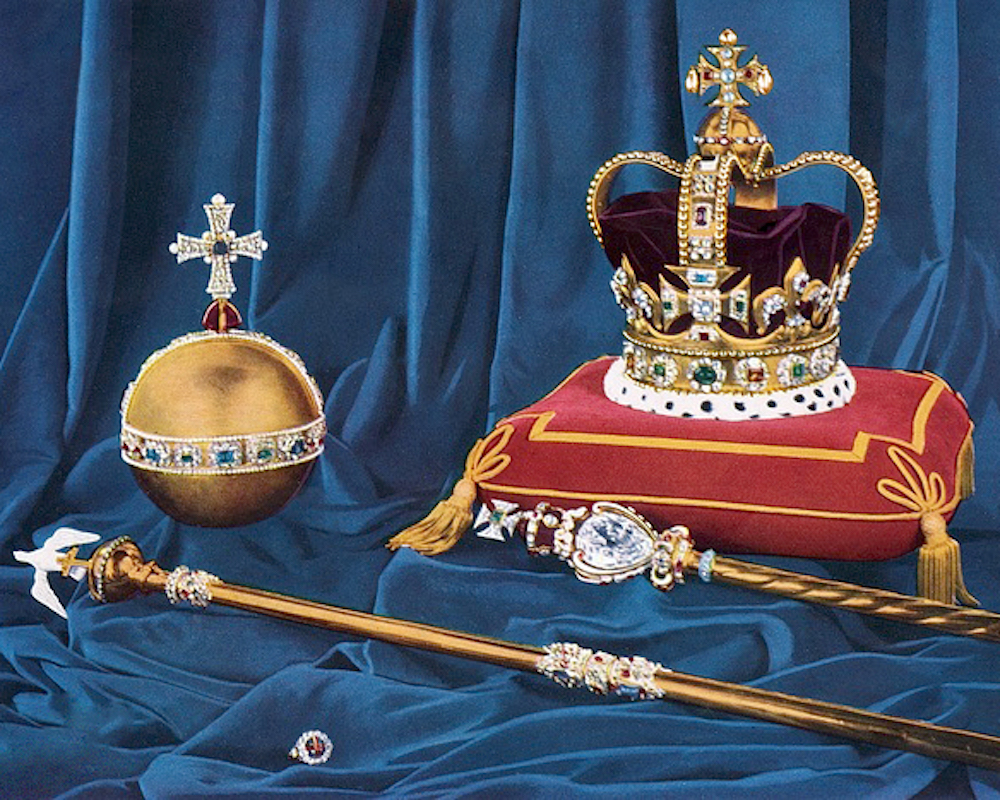
Discover the priceless Crown Jewels at the Tower of London, United Kingdom. Explore their rich history, dazzling regalia, and symbolic importance to the British monarchy.
<h2>Overview</h2><p>Deep within the ancient walls of the Tower of London, a UNESCO World Heritage Site, lies one of the world's most spectacular collections of ceremonial treasures: The Crown Jewels. This dazzling assembly comprises over one hundred objects, adorned with a staggering 23,578 gemstones, representing the enduring legacy and rich history of the British monarchy. More than just glittering exhibits, these priceless items are a working collection, still actively used in significant royal ceremonies, most notably coronations and the State Opening of Parliament.</p><p>Housed securely within the Jewel House, a purpose-built vault in the Waterloo Block of the Tower, the Crown Jewels draw millions of visitors each year. They are a tangible link to centuries of royal tradition, symbolising the power, authority, and continuity of the British sovereign.</p><h2>History & Cultural Background</h2><p>The story of the current Crown Jewels is one of destruction, restoration, and enduring significance. The original medieval coronation regalia, some pieces dating back to the 11th century and associated with Edward the Confessor, were famously destroyed in 1649 during the English Civil War, following the execution of King Charles I. Parliament ordered the melting down of gold frames and the selling of precious stones, intending to erase symbols of the monarchy.</p><p>However, with the Restoration of the Monarchy in 1660, King Charles II commissioned an entirely new set of regalia for his coronation in 1661. Most of the pieces seen today date from this period, created to reflect the grandeur and authority of the reinstated Crown. One notable exception is the Coronation Spoon, a rare 12th-century relic that survived the destruction because it was privately purchased and later returned to Charles II.</p><p>Since the 1660s, the Crown Jewels have been safeguarded within the Tower of London, a fortress that has protected royal treasures for over 700 years. Their preservation at this historic location underscores their immense cultural, historical, and symbolic value, held in trust by the monarch for the nation.</p><h2>What Makes It Special</h2><p>What truly distinguishes the Crown Jewels is not just their intrinsic value, but their profound historical and ceremonial role. They are not static museum pieces but living emblems of kingship and tradition. At the heart of the collection are the Coronation Regalia, used at the solemn moment of crowning.</p><ul><li><strong>St. Edward's Crown</strong>: This magnificent solid gold crown, weighing nearly five pounds (2.23kg), is adorned with semi-precious stones. It is considered the most important piece of the regalia, used only for the moment of crowning a new monarch, as it was for King Charles III in 2023. It was crafted in 1661 to replace the medieval crown.</li><li><strong>Imperial State Crown</strong>: Worn by the monarch upon leaving Westminster Abbey after a coronation and at annual State Openings of Parliament, this crown is famously set with 2,868 diamonds, 17 sapphires, 11 emeralds, 269 pearls, and 4 rubies. It features some of the collection's most renowned gems, including the 317-carat Cullinan II diamond (also known as the Second Star of Africa), the Black Prince's Ruby (a large red spinel), and St. Edward's Sapphire.</li><li><strong>Sovereign's Sceptre with Cross</strong>: This sceptre represents the monarch's temporal power. In 1910, it was re-designed to incorporate the 530.2-carat Cullinan I diamond, also known as the Great Star of Africa, the largest colorless cut diamond in the world.</li></ul><h2>Stories, Fun Facts & Local Details</h2><p>The Crown Jewels are steeped in fascinating tales. One of the most famous stories is the audacious attempt by Colonel Thomas Blood to steal them in 1671. Disguised as a clergyman, he assaulted the keeper of the jewels and managed to flatten St. Edward's Crown with a mallet and hide the orb in his trousers before being apprehended. Surprisingly, King Charles II not only pardoned him but granted him land and a pension.</p><p>Another intriguing aspect is the ongoing discussion surrounding certain diamonds, particularly the Koh-i-Noor, which is set within the Crown of Queen Elizabeth the Queen Mother. Its history, originating from India and becoming part of the British Crown Jewels in the mid-1800s, is often cited as a symbol of colonial conquest and continues to be a subject of international debate.</p><p>Security surrounding the jewels is legendary. They are protected by bomb-proof glass, advanced surveillance systems, and a dedicated team of guards. The iconic Yeoman Warders, often called 'Beefeaters', play a crucial role as guardians and living historians, sharing captivating stories with visitors. It is often said that the jewels are literally priceless, as no insurer in the world would cover their true value.</p><h2>Visitor Perspective</h2><p>Visiting the Crown Jewels offers an unforgettable glimpse into Britain's royal heritage. The exhibition in the Jewel House is designed to provide an immersive experience, complete with multimedia displays that shed light on the history and significance of each treasure. It is recommended to allocate ample time for your visit to the Tower of London, with at least two to three hours to explore the entire complex, including the Jewel House.</p><p>To avoid the longest queues, particularly during peak season, it's advisable to visit the Jewel House either early in the morning shortly after the Tower opens or later in the afternoon. While photography is generally permitted within the Tower grounds, it is strictly forbidden inside the Jewel House to ensure the security and preservation of these invaluable artifacts.</p><p>The Yeoman Warders stationed around the Tower are an excellent source of information and often offer guided tours that enrich the experience with historical anecdotes and local insights. Witnessing the Crown Jewels up close is a powerful encounter with centuries of British history, tradition, and enduring royal splendor.</p>
Location
Coordinates: -0.075949, 51.508112
View on Google Maps