Temple of the Descending God
Cancún, Mexico

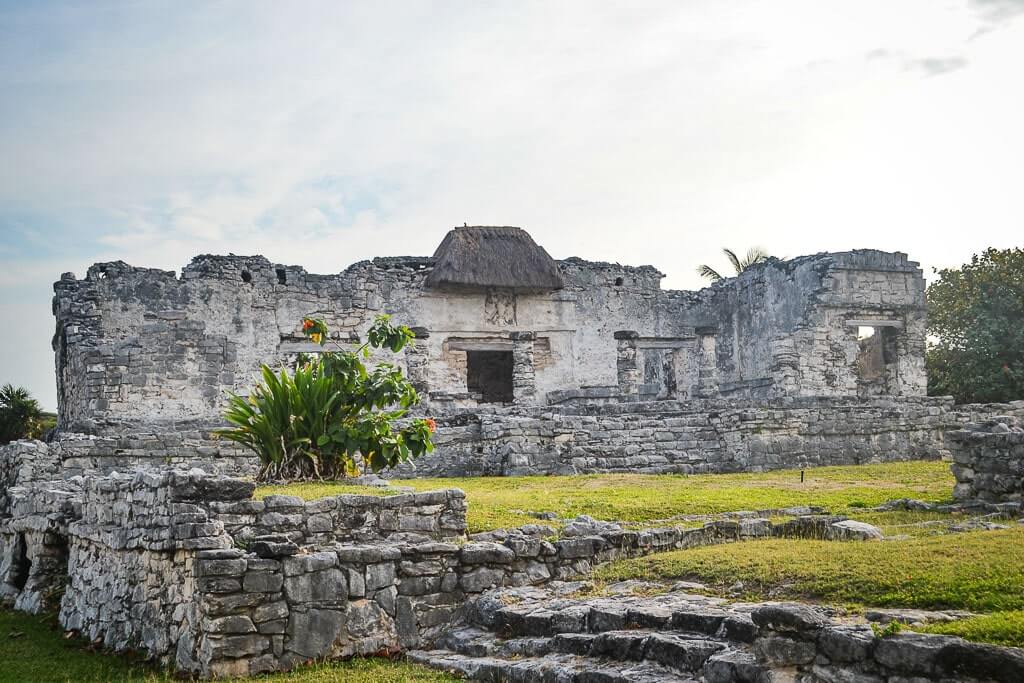
Explore the Temple of the Descending God, a symbolic Mayan ruin in Tulum, Cancún, Mexico, known for its diving deity carving and ancient mysteries.
<h2>Overview</h2><p>Nestled within the ancient Mayan walled city of Tulum, perched dramatically on the cliffs overlooking the Caribbean Sea in Cancún, Mexico, lies the captivating Temple of the Descending God. This relatively small, yet profoundly symbolic structure, is a centerpiece of the Tulum Ruins archaeological site. It stands as a testament to the advanced architectural and spiritual understanding of the Postclassic Maya civilization.</p><p>The temple derives its name from the enigmatic carved figure situated directly above its main entrance, depicting a deity appearing to dive or descend headfirst toward the earth. This unique imagery immediately sets it apart from many other Mayan temples and hints at its deep spiritual significance. A visit here offers a quiet yet unforgettable encounter with Tulum's sacred history, inviting travelers to ponder the beliefs that once thrived in this coastal city.</p><h2>History & Cultural Background</h2><p>The Temple of the Descending God was constructed during the Late Postclassic period, specifically between the 13th and 15th centuries. This era marked Tulum's zenith as a thriving and influential coastal city, strategically positioned for trade along the Yucatán Peninsula. The iconography of the Descending God itself is rich with meaning, representing fertility, transformation, and the cyclical flow between the celestial and terrestrial realms for the Maya people.</p><p>Archaeologists and historians have long debated the precise identity of this winged, diving deity. Many scholars associate the Descending God with Ah Mucen Cab, the Maya Bee God, symbolizing fertility and the life-giving sweetness of honey. Honey was not merely a food source but a crucial economic commodity and export for Tulum, and the stingless Melipona bees played a vital role in the Mayan economy and religious life. Another prominent theory links the deity to the planet Venus, viewing it as a celestial messenger. The temple's architectural alignment, designed to catch the evening glow of Venus and the light of the rising sun at specific points in the solar calendar, lends strong support to this astronomical connection.</p><p>The figure of the Descending God, typically depicted upside down with bent legs and often holding an object, is not exclusive to this temple. It is a recurring motif found across several significant structures within Tulum, including El Castillo (The Castle) and the Temple of the Frescoes, underscoring its central importance to the city's religious practices and cultural identity.</p><h2>What Makes It Special</h2><p>Despite its modest scale, the Temple of the Descending God possesses a magnetic energy and is considered one of the most enigmatic and spiritually charged monuments in the Mayan world. One of its most striking features is the subtle, deliberate inward tilt of its walls. This unique architectural design choice allowed the temple to withstand centuries of exposure to the strong coastal winds and corrosive salt air.</p><p>When the rising sun graces the Tulum coast each morning, its light dramatically floods the temple's doorway, illuminating the carved relief of the Descending God like a celestial spotlight. This breathtaking spectacle highlights the profound connection between Mayan architecture, astronomy, and spirituality. Excavations within the temple have revealed offerings of shells, coral, and jade beads, further hinting at its symbolic ties to both the ocean and the heavens. While faint traces remain today, the interior walls were once vibrantly adorned with red and blue pigments, suggesting a structure that was once alive with color and movement, enriching its sacred narrative.</p><h2>Stories, Fun Facts & Local Details</h2><p>The mystery surrounding the Descending God continues to intrigue modern researchers, echoing the enduring spiritual curiosity of the Maya themselves. Was this figure primarily an agricultural deity ensuring fertile harvests through the honeybee, or a celestial guide tracking the movements of Venus? The ambiguity allows for a deeper appreciation of the complex Mayan cosmology, where the natural world and the divine were intrinsically woven together. The characteristic 'contorted' position of the god, with legs flexed upward, has been described as evoking a human body falling or descending, a powerful visual representation of its purpose.</p><p>Interestingly, the Temple of the Descending God is not the only place in Tulum where this deity is depicted. There are multiple representations throughout the site, and recent conservation efforts by Mexico's National Institute of Anthropology and History (INAH) have focused on restoring these significant figures. This preservation work ensures that the legacy of the Descending God, an emblematic figure of the ancient Maya's eastern coast, continues to inspire awe and reflection for future generations.</p><h2>Visitor Perspective</h2><p>Exploring the Temple of the Descending God is a highlight for many visitors to the Tulum Ruins. Located conveniently within the archaeological zone, just southwest of the iconic El Castillo, it's easily accessible as part of a wider tour of the site. To fully immerse yourself in its serene atmosphere and appreciate the subtle details without large crowds, it's highly recommended to plan your visit for early morning or late afternoon. During these times, the light casts long, golden shadows across the ancient carvings, enhancing the spiritual ambiance and making for more comfortable exploration before the midday heat.</p><p>As you wander through the ruins, remember to wear comfortable shoes, bring plenty of water, and protect yourself from the sun with a hat and sunscreen, as shade is limited across the site. Take a moment to pause before the Temple of the Descending God and consider the profound beliefs and intricate knowledge of astronomy and architecture held by the ancient Maya. It's a place where the whispers of a forgotten civilization blend with the sound of the Caribbean waves, offering a truly reflective and inspiring experience.</p>
Location
Coordinates: -87.430588, 20.214788
View on Google Maps