St. Paul’s Cathedral
London, United Kingdom

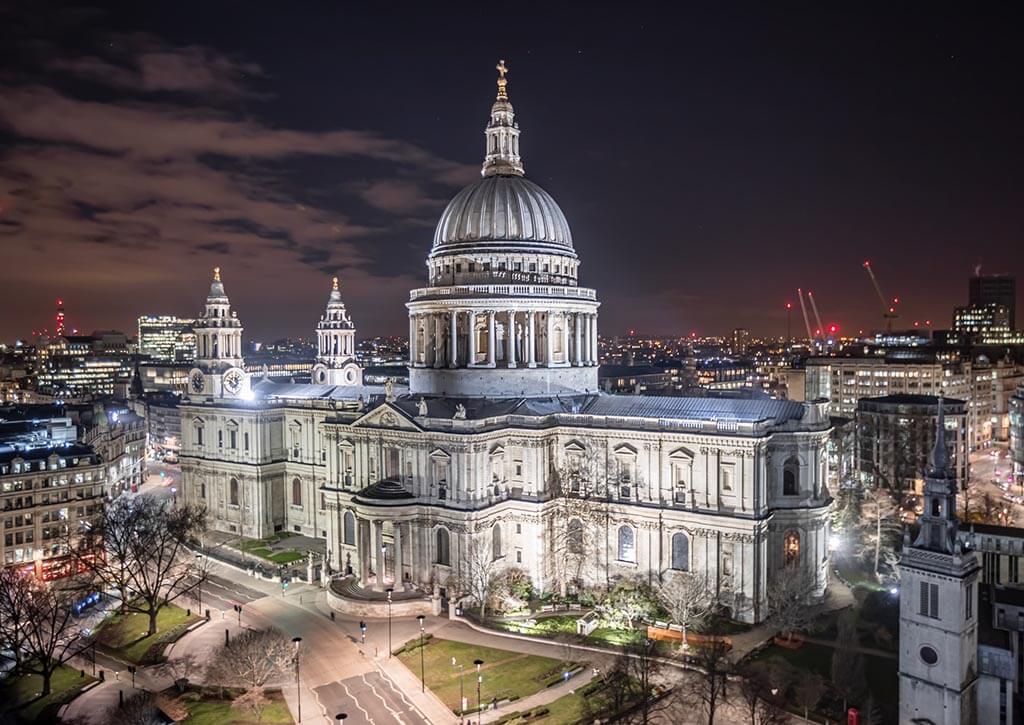
Explore St. Paul's Cathedral in London, United Kingdom – an iconic masterpiece of English Baroque architecture and a symbol of British history.
<h2>Overview</h2><p>St. Paul’s Cathedral, an enduring symbol of London's resilience and architectural grandeur, stands proudly atop Ludgate Hill, the highest point in the City of London. This iconic Anglican cathedral serves as the seat of the Bishop of London and the mother church of the Diocese of London. Designed by the visionary architect Sir Christopher Wren, the present structure is a masterpiece of English Baroque style, completed in 1710. Its world-renowned dome has dominated the city's skyline for over 300 years and remains one of the highest and most recognizable in the world. St. Paul's is not only a significant place of worship but also a site deeply interwoven with British history and national identity.</p><h2>History & Cultural Background</h2><p>The site where St. Paul’s Cathedral now stands has been a place of Christian worship since AD 604, making the current cathedral the fourth iteration built here. Earlier structures were tragically lost to fire and conflict, with the third, known as 'Old St. Paul’s', largely destroyed in the Great Fire of London in 1666. Sir Christopher Wren was tasked with the immense challenge of designing its replacement, a monumental undertaking that spanned 35 years of construction between 1675 and 1710. Although consecrated for use on December 2, 1697, the cathedral was officially declared complete by Parliament on Christmas Day, 1711. Wren’s design marked a significant departure from previous Gothic styles, embracing the English Baroque movement and creating a structure that would become a national treasure. Throughout its history, St. Paul's has been a central stage for significant national events, bearing witness to royal jubilees and marking moments of both solemnity and celebration.</p><h2>What Makes It Special</h2><p>What truly sets St. Paul’s Cathedral apart is its magnificent and innovative dome, one of the largest in the world. Wren's ingenious design features a triple-shell construction: an outer dome visible from the city, a hidden brick cone providing structural support, and a grand inner dome that can be admired from within the cathedral. Visitors can ascend 528 steps to reach the Golden Gallery at the very top, offering breathtaking panoramic views across London. On the way, the Whispering Gallery, located 30 meters (98 feet) above the cathedral floor, captivates visitors with its unique acoustics, allowing a whisper on one side to be heard clearly on the opposite side. The cathedral's exterior is crafted from durable, light grey Portland stone, while the interior boasts intricate marble floors, colorful stone mosaics, and ornate ironwork, all contributing to its awe-inspiring beauty. As the second-largest church building in the United Kingdom by area, after Liverpool Cathedral, its sheer scale and architectural detail are profoundly impressive.</p><h2>Stories, Fun Facts & Local Details</h2><p>St. Paul's Cathedral has been the backdrop for numerous pivotal moments in British history. It famously hosted the wedding of Prince Charles and Lady Diana Spencer in 1981, a global event that captured millions of hearts. The cathedral's crypt is the final resting place for many national heroes, including its architect Sir Christopher Wren, Admiral Lord Nelson, and the Duke of Wellington. State funerals for figures like Sir Winston Churchill and Margaret Thatcher have also taken place here, underscoring its role in national remembrance. During the darkest days of World War II's Blitz, images of St. Paul's dome, defiant amidst the smoke and fire, became a powerful symbol of British resilience and hope. Notably, Dr. Martin Luther King Jr. delivered a sermon at St. Paul's to a congregation of over 3,000 people, further cementing its place in significant cultural history. In a more dramatic episode, suffragettes once planned to bomb the Bishop’s throne in 1913, highlighting the cathedral's enduring presence in the national consciousness even during times of social upheaval.</p><h2>Visitor Perspective</h2><p>St. Paul’s Cathedral remains a vibrant, working church with hourly prayers and daily services, which visitors are welcome to attend for free. For those wishing to explore its historical and architectural wonders, sightseeing tickets are available. The cathedral is generally open Monday to Saturday, with slight variations in opening times, particularly on Wednesdays. Access to the Cathedral Floor and the Crypt, which houses tombs and exhibitions, is included with a sightseeing ticket. Climbing the dome offers an unforgettable experience, leading through the Whispering Gallery to the Stone and Golden Galleries, each providing unique perspectives and views. While there is no formal dress code, modest attire is requested as it is an active place of worship. The cathedral is easily accessible, with St. Paul's Underground station just a short walk away. It's recommended to book tickets online in advance, especially during peak seasons, to ensure a smooth visit.</p>
Location
Coordinates: -0.0983, 51.5138
View on Google Maps