Sorbonne University
Paris, France

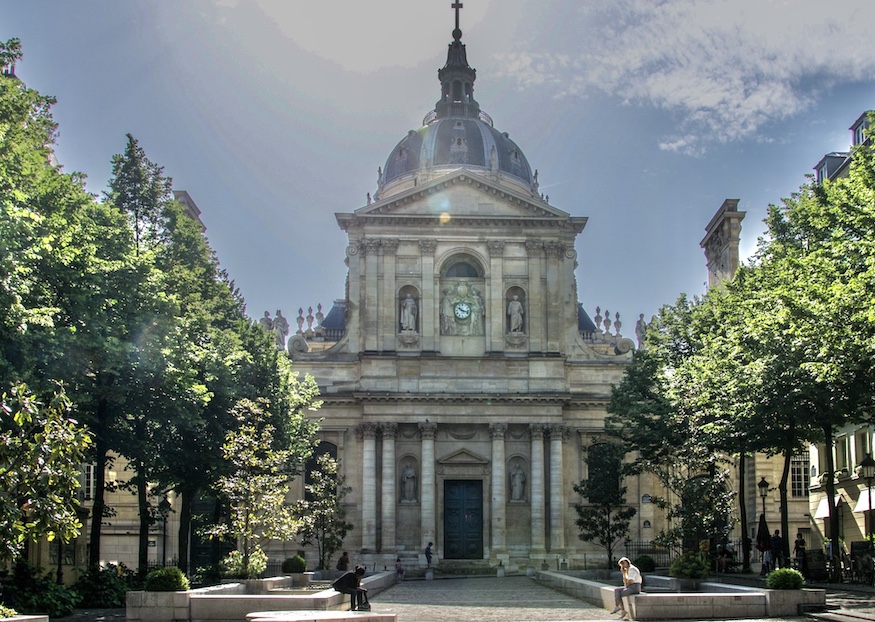
Explore Sorbonne University in Paris's Latin Quarter, a historic beacon of learning and culture with centuries of intellectual legacy. Discover its rich history.
<h2>Overview</h2><p>Nestled in the vibrant heart of Paris's historic Latin Quarter, Sorbonne University stands as a timeless beacon of knowledge and culture. More than just an educational institution, it is a living monument to centuries of intellectual pursuit. Its legacy traces back to the venerable College of Sorbonne, established in 1257 by Robert de Sorbon, the chaplain and confessor to King Louis IX. Today, it proudly continues this tradition as a public research university, formed in its current iteration in 2018 through the merger of Paris-Sorbonne University (Paris IV) and Université Pierre et Marie Curie (Paris VI). Revered globally, the Sorbonne is synonymous with academic excellence and represents one of France's most prestigious universities, deeply interwoven with the very fabric of Parisian intellectual life.</p><h2>History & Cultural Background</h2><p>The story of Sorbonne University is intrinsically linked to the enchanting Latin Quarter itself. This district earned its distinctive name during the Middle Ages, not from ancient Roman occupation as some might assume, but from the everyday language spoken by the myriad students and scholars who populated its streets: Latin. The University of Paris, often referred to as the Sorbonne, emerged around 1150 as one of Europe's earliest universities. Its foundation in 1257 by Robert de Sorbon aimed to provide housing and education for impoverished theology students, quickly evolving into a renowned center for theological and philosophical studies, attracting minds from across the continent.</p><p>Throughout its long history, the Sorbonne has witnessed numerous transformations. Cardinal Richelieu spearheaded a significant renovation in the 17th century, contributing to its grand architecture, and his tomb rests within its elegant chapel. Though briefly closed during the French Revolution, it was re-established and extensively rebuilt in the late 1800s, giving rise to the magnificent main building visible today. Beyond its academic achievements, the Sorbonne has also been a crucible for societal change, famously serving as a focal point for student movements, including the impactful protests of May 1968 that reverberated across France and beyond.</p><h2>What Makes It Special</h2><p>What truly sets Sorbonne University apart is its remarkable fusion of profound historical roots and enduring intellectual vitality. As one of Europe's oldest academic institutions, it carries a weight of history that few others can match. Its architectural splendor is undeniable; the Palais de la Sorbonne, the university's main edifice, is a testament to neoclassical design, housing richly decorated salons, grand galleries, and impressive amphitheatres that preserve invaluable artistic and historical treasures from the 17th and 19th centuries. The Sorbonne Library, famed for its beauty and extensive collections, has long been a source of intellectual enrichment.</p><p>The institution's list of alumni and faculty reads like a 'who's who' of global thought leaders, including Nobel laureates, Fields Medalists, and influential figures such as Marie Curie, René Descartes, and Victor Hugo. This deep association with groundbreaking thinkers underscores its continuous role as a symbol of intelligence, culture, science, and the arts. The iconic dome of its 17th-century chapel, a masterpiece by Jacques Lemercier, remains a distinctive feature, embodying centuries of academic pursuit and architectural grandeur in the Parisian landscape.</p><h2>Stories, Fun Facts & Local Details</h2><p>The Sorbonne is a place rich with fascinating anecdotes and local charm. It holds a unique place in sporting history, as it was within these very walls in 1892 that Pierre de Coubertin first proposed the reinstatement of the Olympic Games, a proposal that led to the birth of the modern Olympics. Another inspiring fact is that Marie Curie, the pioneering physicist and chemist, made history here by becoming the first woman to hold a professorship at the Sorbonne, a significant milestone for women in academia.</p><p>The Latin Quarter's name itself is a 'fun fact' – it wasn't due to Roman heritage, but the medieval scholars who conversed and taught in Latin, shaping the district's intellectual identity. Furthermore, the Sorbonne was a site of technological innovation, hosting the first printing press in France in 1469, a pivotal moment in the dissemination of knowledge. Beyond the university's direct influence, the surrounding Latin Quarter teems with other historical gems like the ancient Roman baths, the majestic Pantheon, the serene Jardin des Plantes, and the captivating Musée de Cluny, all contributing to an immersive historical experience for any visitor.</p><h2>Visitor Perspective</h2><p>While the primary university buildings are active academic spaces and generally not open for casual, unsupervised wandering, the Sorbonne offers opportunities for curious visitors to delve into its grandeur. Guided tours of the 'Sorbonne academic palace' are available, providing an exclusive glimpse into its magnificent salons, historic galleries, and the ornate chapel, which houses Cardinal Richelieu's tomb. Occasionally, the chapel may also host exhibitions or concerts, allowing public access to this architectural marvel.</p><p>Even without an interior tour, the presence of the Sorbonne profoundly shapes the atmosphere of the Latin Quarter. Visitors can immerse themselves in the vibrant student life by simply enjoying a coffee at one of the many lively cafés surrounding the university, absorbing the intellectual buzz that has characterized this district for centuries. The charming streets of the Latin Quarter invite exploration, offering a sense of connection to the generations of scholars and artists who have walked these paths, making it a truly engaging experience for any traveler.
Location
Coordinates: 2.3393, 48.8425
View on Google Maps