Sandal Bedesten
Istanbul, Turkey

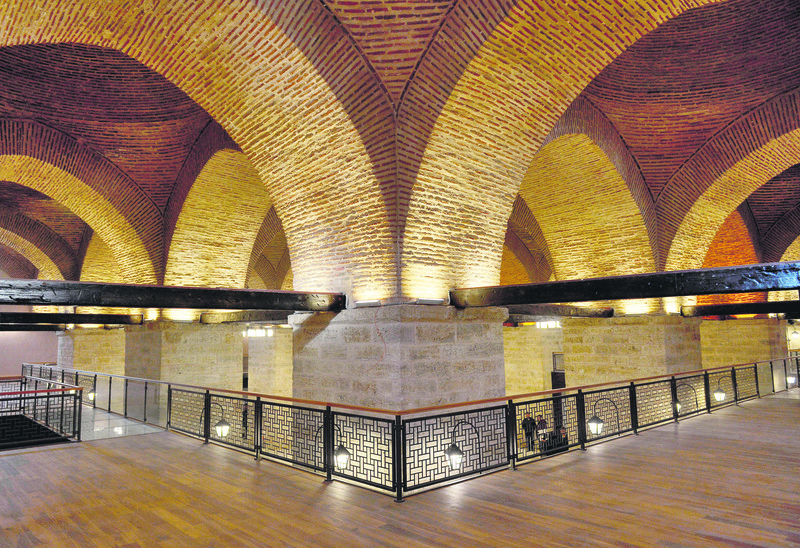
Discover Sandal Bedesten, a historic core of Istanbul's Grand Bazaar. Explore its ancient architecture, rich history in textile trade, and unique cultural significance in Turkey.
<h2>Overview</h2><p>Deep within the labyrinthine passages of Istanbul's Grand Bazaar lies a historical treasure known as Sandal Bedesten. This architectural marvel, one of two core bedestens that formed the genesis of the sprawling market, offers a quieter, more reflective experience compared to the bustling outer streets. It is a robust, domed structure, rectangular in plan, a testament to Ottoman engineering and commercial foresight. Originally a hub for the textile trade, particularly fine silks, Sandal Bedesten stands as a significant landmark, inviting visitors to step back in time and appreciate the enduring legacy of Istanbul's mercantile past.</p><p>Today, while the surrounding Grand Bazaar teems with millions of visitors annually, Sandal Bedesten sometimes retains a more subdued atmosphere. It has, over centuries, adapted its function, at times serving as an auction hall for carpets, and in some instances, even housing contemporary establishments within its ancient walls. Its sturdy stone construction, featuring twelve massive pillars supporting twenty brick domes, speaks to its original purpose of safeguarding valuable goods, a feature common to bedestens across the Ottoman Empire.</p><h2>History & Cultural Background</h2><p>The story of Sandal Bedesten is intricately woven into the fabric of Istanbul's post-conquest development. Commissioned by Sultan Mehmed II, the Conqueror, after the Ottoman capture of Constantinople in 1453, the Grand Bazaar began with the construction of two fortified market halls, or bedestens. The first was the Cevahir Bedesten (Inner Bedesten), followed by the Sandal Bedesten. While some sources suggest its construction around 1472, others place it later, during the reign of Sultan Suleiman the Magnificent in the 16th century.</p><p>The name 'Sandal' itself is steeped in history, derived from a specific type of fine, striped silk fabric, sometimes woven in Bursa, which was traditionally the color of sandalwood and was a primary commodity traded within its walls. Initially, Sandal Bedesten became the epicenter of the textile and fabric trade, distinguishing it from the Cevahir Bedesten, which focused on more precious items like jewelry and antiques. These two isolated structures gradually attracted numerous shops, creating a dense commercial quarter that evolved into the vast Grand Bazaar we know today by the early 17th century.</p><h2>What Makes It Special</h2><p>Sandal Bedesten's distinctiveness lies in its robust architecture and its historical role as a specialized trade center. Its design, with thick stone walls, a rectangular plan measuring approximately 40.20 meters by 42.20 meters, and multiple domes, was built for security and resilience. The twelve central stone piers and twenty brick domes create a striking interior, offering a cool and quiet respite from the surrounding bazaar's hustle and bustle. Unlike the Inner Bedesten where shops were carved into both inner and outer walls, the Sandal Bedesten primarily featured shops along its outer walls.</p><p>Its architectural typology represents a significant form of Ottoman urban planning, where such secure, domed structures formed the commercial core around which cities developed. The very existence of two such substantial bedestens within one bazaar, a rarity in the Ottoman Empire, underscores Istanbul's unparalleled importance as a commercial hub.</p><h2>Stories, Fun Facts & Local Details</h2><p>One fascinating aspect of bedestens, including Sandal Bedesten, was their function beyond simple trade. They acted as secure depositories where merchants could entrust their most valuable possessions overnight. Heavy iron doors and vigilant guards ensured the safety of goods, a tradition highlighting the trust and importance placed on these establishments. In essence, bedestens served as early forms of banks or stock exchanges, facilitating large commercial transactions and even taxation.</p><p>The Grand Bazaar's organic growth around the bedestens meant that merchants selling similar goods often clustered together, leading to streets named after specific trades. This historical organization gives insight into the traditional Ottoman market structure. While Sandal Bedesten was once vibrant with the sale of 'sandal' fabric, its transformation over time, including its use for carpet auctions in the early 20th century, showcases its adaptability. Today, visitors might find modern shops selling textiles, carpets, and souvenirs, or even a contemporary restaurant, juxtaposed against its ancient framework.</p><h2>Visitor Perspective</h2><p>For the curious traveler, Sandal Bedesten offers a unique lens into the historical commercial heart of Istanbul. It's a place to appreciate the enduring architecture and the profound history that shaped the Grand Bazaar. While it may not always possess the intense energy of other bazaar sections, its tranquility allows for a closer examination of its architectural details—the brick domes, arched galleries, and sturdy pillars.</p><p>Stepping inside provides a tangible connection to centuries of trade and culture, offering a moment of quiet contemplation away from the sensory overload of the main bazaar lanes. Exploring Sandal Bedesten helps one understand the foundational elements of this historic marketplace and the ingenious design that allowed it to thrive for over five centuries. It is a place that whispers stories of silk, commerce, and the strategic foresight of Ottoman rulers, making it an essential stop for anyone wishing to delve deeper into the Grand Bazaar's soul.</p>
Location
Coordinates: 28.968058, 41.010658
View on Google Maps