Poets’ Corner
London, United Kingdom

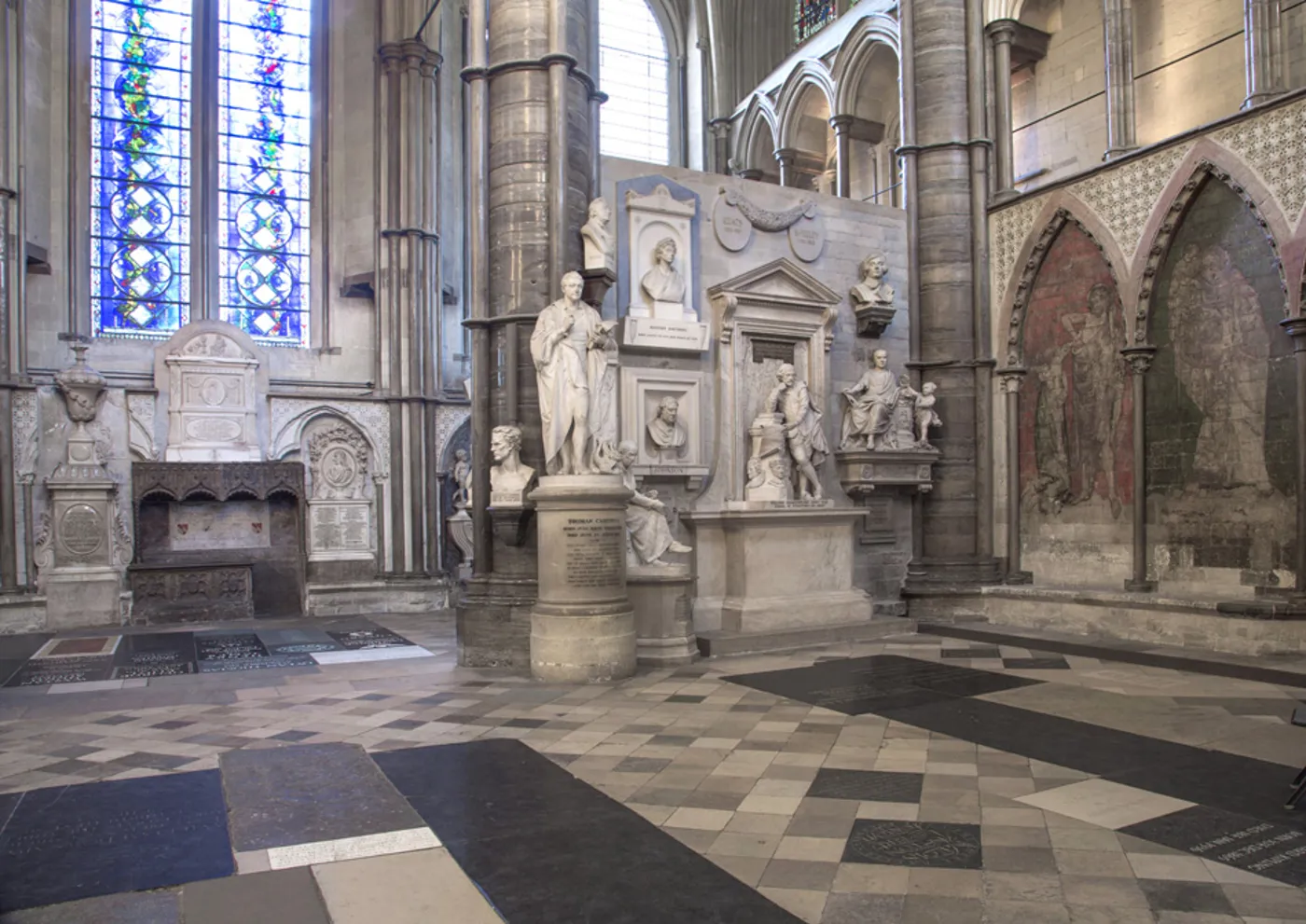
Explore Poets' Corner in Westminster Abbey, London, United Kingdom – a sacred space honoring over 100 literary greats with burials and memorials.
<h2>Overview</h2><p>Nestled within the venerable walls of Westminster Abbey in London, United Kingdom, lies a truly unique and hallowed space known as Poets' Corner. Located in the Abbey's South Transept, this area is a profound testament to Britain's rich literary heritage, serving as a burial ground and memorial site for over 100 poets, playwrights, and writers. It has become a place of pilgrimage for literature enthusiasts from across the globe, offering a tangible connection to the creative minds that have shaped English culture and language for centuries.</p><p>Far more than just a historical footnote, Poets' Corner is a vibrant, living memorial where the echoes of literary giants resonate through time. Visitors can explore a captivating collection of inscribed stone slabs, elaborate monuments, busts, and memorial windows, each dedicated to a figure who left an indelible mark on the world of letters.</p><h2>History & Cultural Background</h2><p>The tradition of Poets' Corner began somewhat by accident in 1400 with the burial of Geoffrey Chaucer, the author of 'The Canterbury Tales'. His interment in Westminster Abbey was primarily due to his position as Clerk of the King's Works, a role involving the maintenance of royal buildings, rather than his literary achievements at the time. However, this 'accidental beginning' laid the groundwork for what would become one of the most prestigious literary sites globally.</p><p>Nearly two centuries later, in 1599, the poet Edmund Spenser, known for 'The Faerie Queene', requested to be buried near Chaucer. His wish was granted, marking a conscious step towards establishing this part of the Abbey as a dedicated literary pantheon. By the 1730s, this section of the South Transept had become widely recognized as Poets' Corner. The responsibility for deciding who receives a place within this revered space rests with the Dean of Westminster, who consults widely before making selections based on merit.</p><h2>What Makes It Special</h2><p>What sets Poets' Corner apart is its unparalleled concentration of literary talent. It brings together a diverse array of creative minds, from the universally celebrated to those whose fame may have dimmed slightly over the centuries. This creates a rich tapestry that reflects the evolution of British literature itself. It's a place where you can find figures as varied as William Shakespeare (commemorated with a monument, though buried elsewhere), Charles Dickens, Jane Austen, and the Brontë sisters, all honored within steps of each other.</p><p>The memorials themselves are as diverse as the individuals they honour, ranging from simple floor slabs bearing a name and inscription to grand, carved stone monuments and elegant busts. As space has become increasingly scarce, newer forms of commemoration, such as memorial windows and shared floor slabs for groups like the First World War poets, have been introduced, ensuring the tradition continues to adapt and thrive.</p><h2>Stories, Fun Facts & Local Details</h2><p>Poets' Corner is steeped in fascinating stories. Geoffrey Chaucer's initial burial, for instance, highlights how history can take unexpected turns to create enduring legacies. William Shakespeare, despite his towering literary stature, is not buried here; his memorial dates to 1740, long after his death, while his grave remains in Stratford-upon-Avon. Similarly, Jane Austen and the Brontë sisters are remembered with memorials, not burials.</p><p>Perhaps one of the most poignant tales is that of Charles Dickens, who explicitly wished for a modest burial in Rochester, Kent, but whose immense public popularity led to his interment in Poets' Corner. Thomas Hardy's burial involved a remarkable compromise: his heart was interred in his beloved Stinsford, while his ashes were laid to rest in the Abbey. Another interesting detail involves Lord Byron, whose 'questionable morality' delayed his commemoration in Poets' Corner for over a century until 1969. While predominantly for writers, other notable figures, such as the composer George Frideric Handel, also find their resting place or memorial here.</p><h2>Visitor Perspective</h2><p>Visiting Poets' Corner is an experience that transcends a typical museum visit; it's an intimate journey through the soul of English literature. As you walk among the memorials, you are treading the same ground where countless literary luminaries have been honored, feeling a profound connection to their enduring words and worlds. It’s a moment for quiet reflection, to ponder the power of language and the lasting impact of these creative spirits. Look closely at the details of the carvings, the choice of epitaphs, and the placement of each tribute. Remember that Westminster Abbey is a working church, so visitors are encouraged to observe respectful behavior. This special 'corner' serves as a powerful reminder of how art and intellect shape national identity, inviting you to become a part of its continuing story.</p>
Location
Coordinates: -0.127465, 51.49939
View on Google Maps