Palace of Versailles
Versailles, France

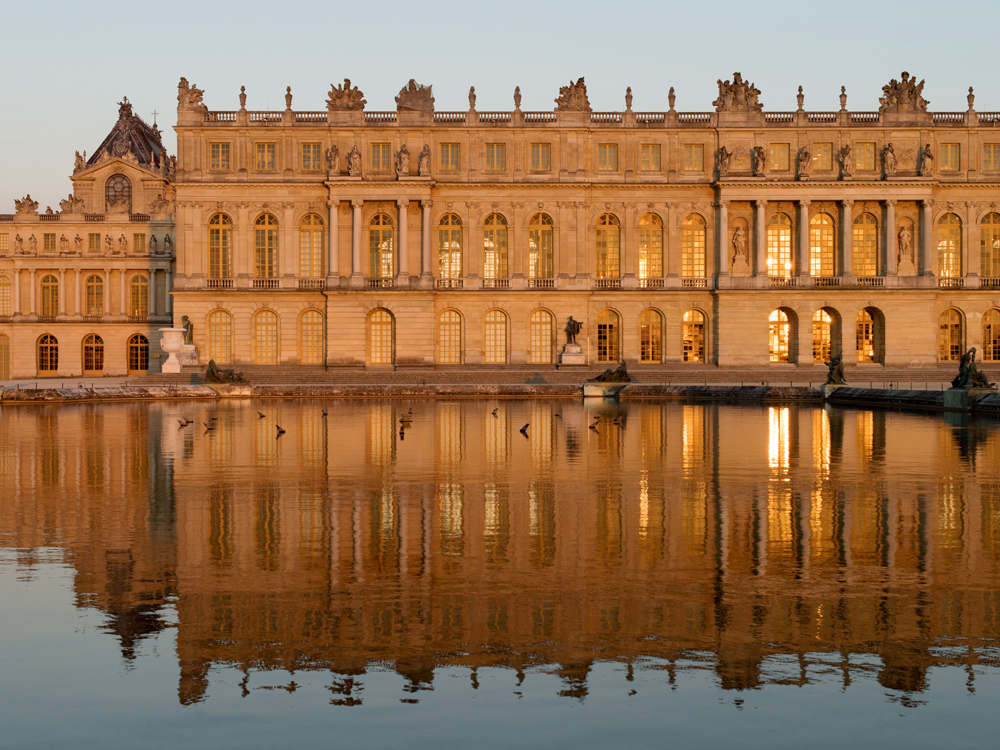
Discover the Palace of Versailles in Versailles, France. Explore its opulent Baroque architecture, iconic Hall of Mirrors, and magnificent gardens. A UNESCO World Heritage site.
<h2>Overview</h2><p>The Palace of Versailles, or Château de Versailles, stands as a monumental emblem of French artistry and history, located in the city of Versailles, France, just southwest of Paris. Originally conceived as a humble hunting lodge for King Louis XIII in 1623, it was magnificently transformed by his successor, Louis XIV, into the principal royal residence and the seat of French government from 1682 until the French Revolution in 1789. Today, this sprawling estate is a UNESCO World Heritage site and one of the world's most visited cultural landmarks, offering an unparalleled glimpse into the grandeur of the French monarchy.</p><p>Spanning an immense area, the palace complex includes the main château, the vast Gardens of Versailles, and the Trianon Estate, which comprises the Grand Trianon, Petit Trianon, and Marie Antoinette's Hamlet. The main palace alone boasts an astonishing 2,300 rooms spread over 63,154 square meters, adorned with countless artistic treasures. Its meticulously landscaped gardens, designed by André Le Nôtre, cover approximately 800 hectares and feature an intricate network of fountains, sculptures, and canals.</p><h2>History & Cultural Background</h2><p>The history of Versailles begins modestly with Louis XIII's decision to build a hunting lodge. However, it was Louis XIV, known as the 'Sun King,' who envisioned and executed the transformation of this modest retreat into an opulent palace, symbolizing his absolute power and the glory of France. Construction and expansion efforts, primarily directed by architects Louis Le Vau and Jules Hardouin-Mansart, and landscape architect André Le Nôtre, spanned from 1661 to 1715.</p><p>In 1682, Louis XIV officially moved his court and government to Versailles, establishing it as the de facto capital of France. This move was a strategic centralization of power, requiring the nobility to reside at court, thereby bringing them under the King's direct influence. Subsequent monarchs, Louis XV and Louis XVI, also left their mark, primarily through interior alterations. The French Revolution tragically ended Versailles' role as a royal residence when the royal family was forced to return to Paris in 1789.</p><p>In the 19th century, King Louis-Philippe transformed the palace into the Museum of the History of France in 1837, preserving its legacy for future generations. Versailles has also played a significant role in world events, notably serving as the venue for the signing of the Treaty of Versailles in 1919, which officially ended World War I, taking place in the iconic Hall of Mirrors.</p><h2>What Makes It Special</h2><p>The Palace of Versailles is a masterpiece of Baroque and Classical architectural styles, renowned for its dramatic grandeur, strict symmetry, rich ornamentation, and intelligent use of natural light. The exterior, especially the garden façade, showcases classical elements with its balanced proportions and ordered ranks of windows, conveying power and authority.</p><p>Undoubtedly, the most celebrated interior space is the Hall of Mirrors (Galerie des Glaces), a breathtaking gallery adorned with 357 mirrors, reflecting the light from its seventeen arched windows and amplifying the opulent decor. The Hall's ceiling, painted by Charles Le Brun, depicts the early achievements of Louis XIV, further cementing his 'Sun King' persona. The Sun King's personal touch is evident throughout, as the palace was designed to radiate outwards like the sun's rays, with the Hall of Mirrors at its dazzling center.</p><p>Beyond the palace walls, the Gardens of Versailles are equally extraordinary. Designed by André Le Nôtre, they are considered the prime example of the French formal garden style, characterized by geometric patterns, meticulously manicured lawns, statues, and elaborate fountains. The Grand Canal, extending a mile, is a prominent feature, offering stunning perspectives and serving as a focal point for the garden's vastness.</p><h2>Stories, Fun Facts & Local Details</h2><p>Life at Versailles under the Sun King was a spectacle. Royal daily routines, from waking up (the 'lever') to going to bed (the 'coucher'), were public affairs performed before courtiers and dignitaries. Interestingly, Louis XIV insisted that everything used in the palace's construction and decoration be French-made. To achieve the stunning Hall of Mirrors, Venetian mirror makers, who held a monopoly on large mirror production, were enticed to France, reportedly leading to assassination orders from Venice.</p><p>The sheer scale of Versailles is staggering; it features over 700 rooms, 60 staircases, and 1,200 fireplaces. The gardens alone contain 400 sculptures and 1,400 fountains. A peculiar detail is that, in the 17th century, the intense fragrance from the myriad flowers in the gardens was so potent it reportedly made visitors feel ill.</p><p>Marie Antoinette, the last Queen of France, created her own private world within the estate, known as the Hameau de la Reine (Queen's Hamlet). This picturesque, rustic village with a farm, dairy, and cottages allowed her and her companions to escape the rigid court etiquette and experience a simplified 'peasant' life. Furthermore, the Diane Room was nicknamed 'la Salle des Applaudissements' (the Room of Applause) because courtiers would gather nightly to applaud Louis XIV's skill at snooker.</p><h2>Visitor Perspective</h2><p>Visiting the Palace of Versailles is an immersive journey through French history and culture. To fully appreciate its splendor and avoid the largest crowds, it's advisable to arrive early in the morning, right at opening time. The palace is generally open every day except Mondays, and specific holidays like December 25th and January 1st. A comprehensive visit encompassing the main Palace, the Gardens, and the Trianon Estate can easily take a full day.</p><p>Key attractions within the Palace include the magnificent Hall of Mirrors, the King's and Queen's State Apartments, and the Royal Chapel. Outside, the vast Gardens, designed by André Le Nôtre, invite leisurely strolls among its geometric flowerbeds, sculptures, and numerous fountains. Don't miss the Trianon Estate, particularly Marie Antoinette's Hamlet, for a different architectural and historical experience.</p><p>Audio guides and mobile applications are available to enhance your understanding of the estate's rich history and architectural details. While admission to the gardens is often free, especially during the low season (November to March), charges may apply during fountain shows and musical garden events. Free admission to the entire estate is typically offered on the first Sunday of each month from November to March.</p>
Location
Coordinates: 2.1203, 48.8047
View on Google Maps