Ordination Hall
Bangkok, Thailand

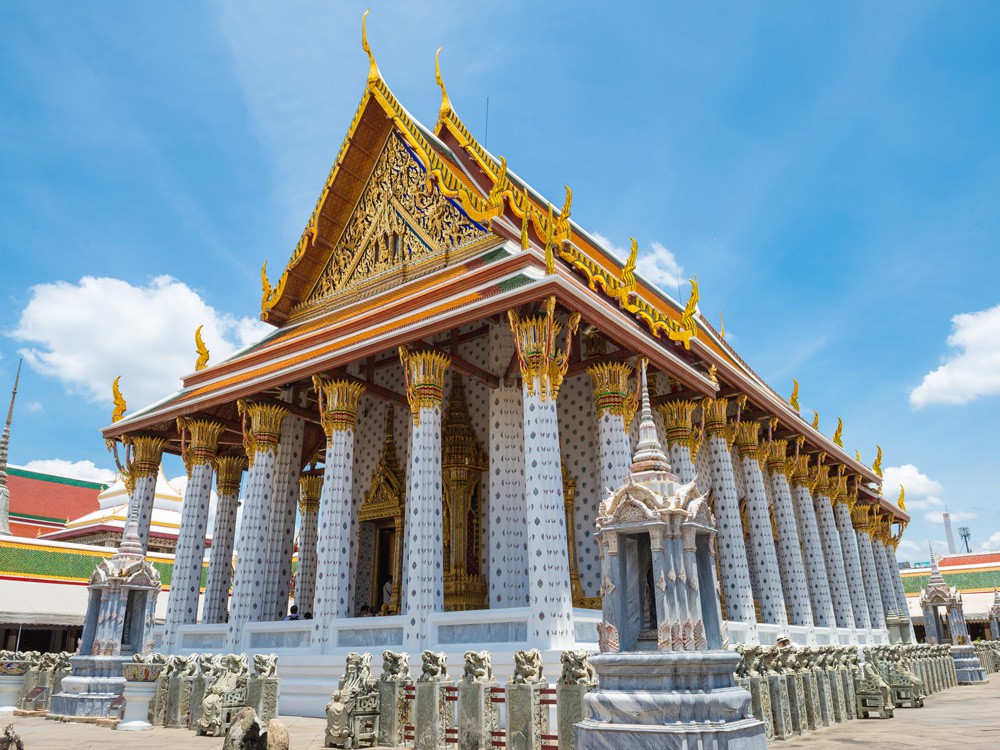
Discover the Ordination Hall (Phra Ubosot) at Wat Arun in Bangkok, Thailand, home to the Niramitr Buddha, royal ashes, and stunning murals.
<h2>Overview</h2><p>Stepping into the serene precincts of Wat Arun, often hailed as the 'Temple of Dawn', travelers are captivated by its iconic, porcelain-encrusted central prang. However, tucked away within this magnificent complex on the west bank of Bangkok's Chao Phraya River, lies a structure of profound spiritual significance: the Ordination Hall, known in Thai as the Phra Ubosot. While less immediately striking than the towering spires from a distance, this hall serves as the temple's spiritual heart, a sacred space where monks are ordained and important Buddhist rituals are performed. Its understated elegance and rich interior offer a deeply contemplative experience, contrasting beautifully with the grandeur of the temple's exterior.</p><h2>History & Cultural Background</h2><p>The Ordination Hall's history is deeply interwoven with the fabric of the Rattanakosin era, a period of significant rebuilding and cultural flourishing in Thailand. Its construction dates back to the early 19th century. Originally, a temple known as Wat Makok had existed on this site since the Ayutthaya Kingdom. After the fall of Ayutthaya, King Taksin established his new capital in Thonburi and made this temple his royal monastery, renaming it Wat Chaeng.</p><p>The current Ordination Hall and its primary Buddha image are particularly associated with King Rama II (1809–1824), who is credited with designing the revered Niramitr Buddha housed within. During King Rama V's reign (1868–1910), the exquisite murals that adorn the hall's interior were created, further enriching its spiritual atmosphere. For a brief but significant period, from 1778 to 1782, Wat Arun, and by extension its Ordination Hall, even housed the revered Emerald Buddha, before it was moved to its current home at Wat Phra Kaew in the Grand Palace.</p><h2>What Makes It Special</h2><p>The true distinction of Wat Arun's Ordination Hall lies in its spiritual gravitas and the artistic treasures it safeguards. At its core is the golden Niramitr Buddha image, a masterpiece said to have been personally designed by King Rama II. This makes the image unique, reflecting a direct royal artistic contribution. Even more remarkably, the ashes of King Rama II are enshrined beneath this principal Buddha image, imbuing the hall with profound royal and spiritual significance. This detail often moves visitors, connecting them directly to a revered monarch and the temple's royal heritage.</p><p>The interior walls are a canvas of intricate murals, depicting pivotal moments from the life of Buddha. These vibrant narratives serve not only as artistic expressions but also as visual teachings, guiding devotees through the path of enlightenment. Guarding the entrance to this sacred space are two towering mythological figures known as Thotsakan (a green-skinned demon king) and Sahatsadecha (a white-skinned giant). These 'yaksha' or giant guardians, drawn from the Ramakien, Thailand's national epic, stand as protectors of the sacred, their colorful forms and fierce expressions adding a dramatic touch to the hall's approach.</p><h2>Stories, Fun Facts & Local Details</h2><p>The presence of the giant guardian figures, Thotsakan and Sahatsadecha, at the entrance is a fascinating cultural detail. These mythical beings are not merely decorative; they are characters from the Ramakien, the Thai version of the Indian epic Ramayana. Thotsakan, the ten-faced demon king, and Sahatsadecha, the thousand-headed ruler, play significant roles in the epic, and their placement here symbolizes their eternal duty to ward off evil and protect the sanctity of the temple's most sacred space. Their vibrant colors and intricate ceramic tile decorations shimmer under the sunlight, making them memorable sights even before entering the hall.</p><p>Another subtle yet meaningful detail found around the Ordination Hall are the finely crafted boundary stones, often made of marble, which define the sacred precinct known as the 'sima'. These markers underscore the hall's importance as a consecrated area for monastic rites. The roof of the Ordination Hall features a central spire, adorned with colorful ceramic and stucco work, hinting at the detailed craftsmanship found within.</p><h2>Visitor Perspective</h2><p>Approaching the Ordination Hall, you are first greeted by the imposing figures of the guardian giants, setting a tone of respectful reverence. Before entering, visitors are kindly reminded to remove their shoes, a customary sign of respect in Thai temples, and to ensure they are dressed modestly, with shoulders and knees covered. The atmosphere inside is one of profound peace and sanctity, inviting quiet contemplation. You can observe the golden Niramitr Buddha and the detailed murals, offering a moment of spiritual connection and appreciation for the artistry. While photography is generally allowed within the temple complex, it's essential to do so discreetly and respectfully, particularly within the Ordination Hall, to maintain the tranquility for those praying or meditating. This immersive experience allows a deeper understanding of Thai Buddhist culture, moving beyond the visual splendor to the spiritual core of Wat Arun.</p>
Location
Coordinates: 100.48889, 13.74361
View on Google Maps