One Times Square
New York, United States

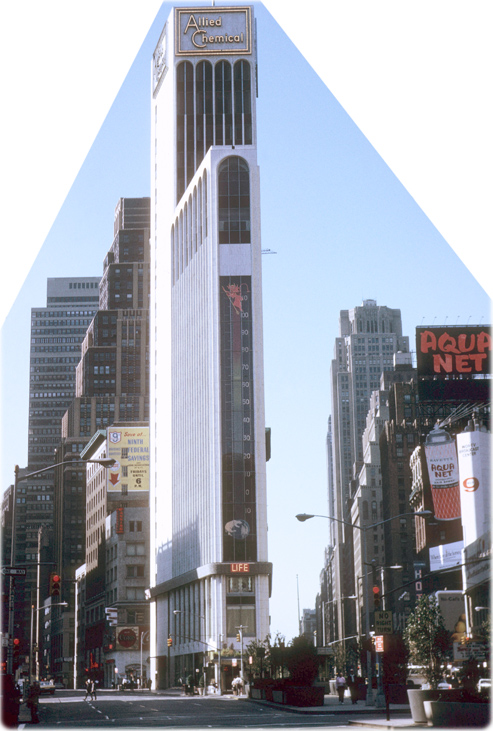
Discover One Times Square in New York, United States – the iconic building at the heart of Times Square, famous for the New Year's Eve Ball Drop.
<h2>Overview</h2><p>At the bustling heart of New York City's Times Square stands One Times Square, an iconic skyscraper that has become synonymous with the vibrant energy and dazzling lights of this world-famous intersection. While seemingly a towering beacon of modern advertising, its story is deeply rooted in the city's past, evolving from a newspaper headquarters to a global stage for celebration and commerce. Today, it is recognized primarily as the home of the legendary New Year's Eve Ball Drop, drawing millions of eyes to its pinnacle each year.</p><p>Standing proudly at the junction of Broadway and Seventh Avenue, One Times Square is not just a building; it is a focal point of Midtown Manhattan, a symbol of New York's enduring spirit and constant reinvention. Its facade, almost entirely covered by massive digital billboards, makes it one of the most visible and valuable advertising spaces on the planet, a testament to its strategic location in what is often called 'The Crossroads of the World'.</p><h2>History & Cultural Background</h2><p>The history of One Times Square dates back to the early 20th century, a period of rapid urban development in New York City. Constructed between 1903 and 1904, the 25-story, 363-foot tall Neo-Gothic skyscraper was designed by Cyrus L. W. Eidlitz. It officially opened its doors on January 1, 1905, serving as the new headquarters for The New York Times.</p><p>It was this very move that transformed the surrounding area's identity. Previously known as Longacre Square, the neighborhood was officially renamed 'Times Square' on April 8, 1904, in honor of the newspaper and its new prominent address. This renaming marked a significant moment, solidifying the area's burgeoning importance.</p><p>The New York Times, however, quickly outgrew the building and moved to more spacious offices nearby in 1913, only eight years after its grand opening. Despite the newspaper's departure, One Times Square remained a central landmark. Its New Year's Eve celebrations, which began with fireworks in 1904 and evolved into the iconic ball drop by 1907, ensured its lasting cultural significance.</p><p>Over the decades, the building underwent several transformations. In 1963, it was sold to Allied Chemical, leading to extensive modifications that replaced its original ornate granite and terracotta with simpler materials. Its destiny as a canvas for advertising began to unfold, with its facade increasingly dedicated to illuminated signs and digital displays.</p><h2>What Makes It Special</h2><p>One Times Square's enduring allure lies primarily in its unique role as the stage for the annual New Year's Eve Ball Drop. This tradition, started in 1907, draws an estimated one million spectators to Times Square each year and billions more globally through broadcasts, making it one of the world's most anticipated celebrations.</p><p>Beyond the midnight countdown, the building stands as a colossal, revenue-generating billboard. Its exterior is almost entirely clad in massive digital screens, making it one of the most expensive and desirable advertising locations worldwide. This commercial transformation means the building itself is less about internal occupancy and more about its external presence, projecting messages and images to an enormous audience daily.</p><p>The architectural shift from a functional office building to a spectacular display platform reflects Times Square's own evolution. The building's prominent position at the southern tip of the 'bowtie' intersection provides unparalleled visibility, cementing its status as an indispensable landmark in New York City's urban landscape.</p><h2>Stories, Fun Facts & Local Details</h2><p>Despite its outward grandeur, One Times Square is largely empty on the inside, serving primarily as a vertical support structure for its famous billboards and housing the New Year's Eve ball. This seemingly paradoxical emptiness highlights the immense value of its external advertising potential, with billboard space costing tens of thousands of dollars per day, or even up to '10,000 per hour'.</p><p>An interesting predecessor to modern digital displays was the 'zipper' news ticker, or Motograph News Bulletin, installed near the base of the building in 1928. This innovative electromechanical ticker delivered headlines to the passing crowds, showcasing the building's early adoption of public information display.</p><p>The New Year's Eve ball drop tradition was inspired by 'time balls' used in the past to signal a precise time. What began with fireworks evolved into the lowering of a lit ball, a safer and equally spectacular alternative. This tradition has been held atop One Times Square nearly every year since, with various ball designs marking different eras.</p><p>Plans are underway for the building's future, including a potential museum dedicated to the history of Times Square and an observatory on its upper floors. These additions would finally allow visitors to experience the building's interior and offer new perspectives on the iconic square.</p><h2>Visitor Perspective</h2><p>For most visitors, One Times Square is experienced from the outside, an integral part of the overwhelming sensory experience that is Times Square. Its glowing screens contribute to the district's reputation as a place that never sleeps, a dazzling spectacle of light and sound.</p><p>Standing in Times Square and looking up at One Times Square connects you directly to a century of history and countless celebratory moments. It's the place where the world collectively turns its gaze on New Year's Eve, and even on an ordinary day, it pulsates with an undeniable energy. The building acts as a magnetic north, drawing the eye and anchoring the entire vibrant scene.</p><p>While direct public access has been limited for decades, the promise of a future museum and observatory offers an exciting prospect for travelers to delve deeper into the building's legacy and gain an elevated view of the 'Crossroads of the World'. Until then, its exterior tells a powerful story of innovation, commerce, and enduring cultural impact, making it an essential sight for anyone exploring New York City.</p>
Location
Coordinates: -73.986519, 40.756355
View on Google Maps