Mona Lisa
Paris, France

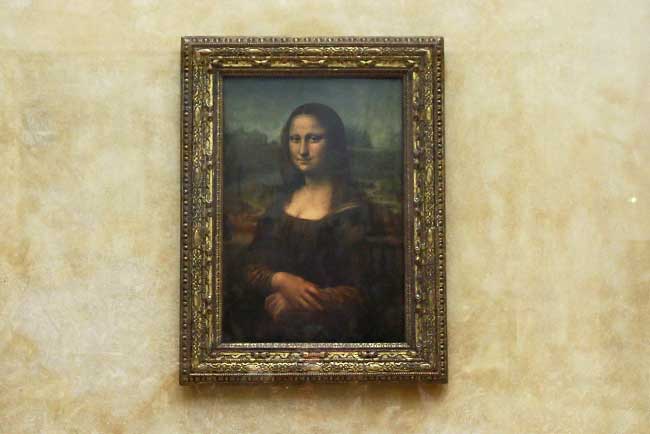
Discover the Mona Lisa, Leonardo da Vinci's iconic masterpiece, at the Louvre Museum in Paris, France. Explore its history, unique charm, and visitor tips.
<h2>Overview</h2><p>The Mona Lisa, often called the world's most famous painting, is a captivating masterpiece housed within the illustrious Louvre Museum in Paris, France. This iconic oil-on-poplar panel portrait, created by the visionary Italian Renaissance artist Leonardo da Vinci, draws millions of visitors annually, all eager to witness its renowned allure. Its modest dimensions, approximately 77 cm by 53 cm (30 in by 21 in), belie its monumental cultural impact and enduring mystery. The painting's subject, with her subtle, enigmatic smile, has fascinated viewers for centuries, making it an indispensable stop for any traveler exploring the artistic treasures of the French capital.</p><h2>History & Cultural Background</h2><p>Leonardo da Vinci commenced painting the Mona Lisa around 1503, reportedly continuing to refine it intermittently until as late as 1517. The portrait is widely believed to depict Lisa Gherardini, the wife of Florentine silk merchant Francesco del Giocondo. This identity is why the painting is also known as 'La Gioconda' in Italian and 'La Joconde' in French, translating to 'the joyous woman' or referring to her married name.</p><p>After da Vinci's death in 1519, the painting was acquired by King Francis I of France and became part of the royal collection. It has been a prominent feature of the Louvre Museum since 1797. Its global fame, however, received an unprecedented boost following a daring theft in 1911. Vincenzo Peruggia, an Italian handyman who had previously worked at the Louvre, stole the artwork, believing it should belong to Italy. Its recovery in 1914 garnered immense international publicity, solidifying its status as a cultural icon and making it 'the most written about, most sung about, and most parodied work of art in the world.'</p><h2>What Makes It Special</h2><p>The Mona Lisa's enduring appeal stems from several revolutionary artistic techniques and intriguing qualities. Leonardo da Vinci pioneered the use of 'sfumato,' a subtle blending of colors and tones that creates soft, hazy transitions, eliminating harsh lines. This technique is particularly evident in the subject's soft gaze and the ethereal landscape behind her, giving the painting its distinctive atmospheric illusionism.</p><p>Perhaps most famous is her enigmatic smile, which appears to subtly change depending on the viewer's angle and perception. This optical illusion, coupled with the intriguing 'Mona Lisa effect' where her eyes seem to follow the observer, contributes significantly to the painting's mystique. The Mona Lisa also revolutionized portraiture, with its three-quarter pose and detailed depiction of a connection between humanity and nature, setting a new standard for future artists during the Renaissance and beyond.</p><h2>Stories, Fun Facts & Local Details</h2><ul><li><strong>The Stolen Icon:</strong> The 1911 theft propelled the Mona Lisa into unprecedented worldwide recognition, transforming it from a celebrated artwork into a global phenomenon.</li><li><strong>Protected Treasure:</strong> Due to its immense value and fragility, the Mona Lisa is displayed behind a thick, bulletproof glass enclosure and kept in a climate-controlled environment to prevent further deterioration of the poplar wood panel.</li><li><strong>A Billion-Dollar Smile:</strong> While not for sale, the Mona Lisa holds the Guinness World Record for the highest insurance valuation in history, estimated at around $870 million in 1962, equivalent to over $1 billion today.</li><li><strong>Missing Details?:</strong> Many visitors notice the absence of visible eyebrows and eyelashes on the Mona Lisa. Scholars believe they may have faded over time or that Leonardo intentionally left them unfinished, adding another layer to her enigmatic appearance.</li><li><strong>More Than a Painting:</strong> The Mona Lisa has transcended the art world, becoming a symbol referenced and parodied across popular culture, from movies and music to everyday objects.</li></ul><h2>Visitor Perspective</h2><p>The Mona Lisa is situated in the Salle des États (Room 711) on the first floor of the Denon Wing of the Louvre Museum. Navigating the museum is made easy with clear signage pointing towards 'Mona Lisa' or 'La Joconde'. To make the most of your visit and avoid the largest crowds, it's highly recommended to arrive early in the morning when the museum opens or later in the evening during extended hours, particularly on Wednesdays and Fridays. Booking your Louvre Museum ticket online in advance is also advisable to secure your entry time and bypass ticket purchase queues.</p><p>Be prepared for a viewing experience that involves a crowd, as it is the most visited artwork. The painting is observed from a controlled distance behind its protective barrier, so focusing on appreciating the artwork's details rather than getting extremely close is key. After admiring the Mona Lisa, take time to explore other masterpieces located nearby in the Denon Wing, such as Veronese's 'The Wedding at Cana' directly opposite, and David's 'The Coronation of Napoleon.'</p>
Location
Coordinates: 2.3376, 48.8606
View on Google Maps