Maqam Ibrahim
Mecca, Saudi Arabia

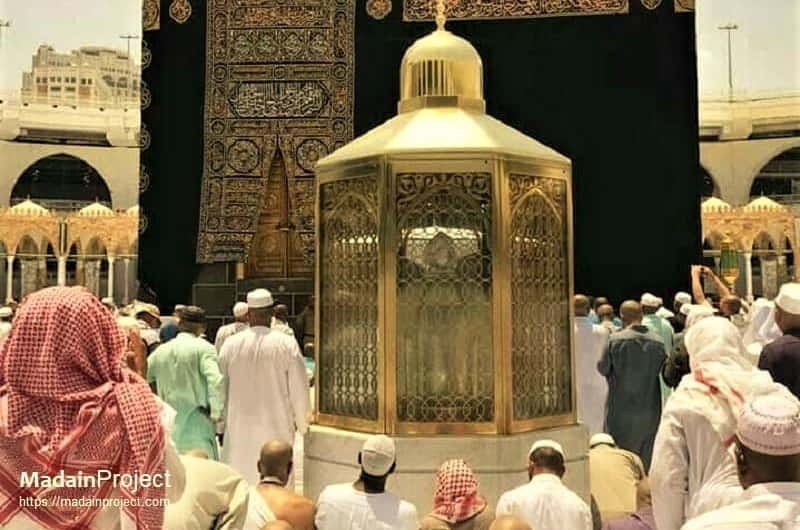
Explore Maqam Ibrahim in Mecca, Saudi Arabia, a sacred site within Masjid al-Haram, housing the miraculous footprints of Prophet Ibrahim.
<h2>Overview</h2> <p>Nestled within the sacred confines of Masjid al-Haram in Mecca, Saudi Arabia, lies Maqam Ibrahim, a profound site holding immense spiritual and historical significance for Muslims worldwide. More than just a stone, it represents a tangible link to Prophet Ibrahim (Abraham), a revered figure in Islamic tradition. Often translated as the 'Station of Ibrahim,' this small, cubic monument houses a stone believed to bear the imprints of Prophet Ibrahim's feet. It stands as a beacon of faith, drawing pilgrims who perform the Hajj and Umrah to reflect on the unwavering devotion and monumental efforts of the prophets. Its presence near the Holy Kaaba underscores its centrality to Islamic worship and history.</p> <h2>History & Cultural Background</h2> <p>The history of Maqam Ibrahim is deeply intertwined with the construction of the Holy Kaaba itself. According to Islamic tradition, Prophet Ibrahim, aided by his son Prophet Ismail (Ishmael), was commanded by Allah to build the Kaaba as the first house of worship on Earth. As the walls of the Kaaba grew taller, Prophet Ibrahim required a platform to reach the upper sections. This miraculous stone served that purpose, rising and descending as needed, allowing him to continue his sacred task. The imprints of his feet were left upon the stone as a lasting testament to this divine assistance and his steadfast obedience.</p> <p>The significance of Maqam Ibrahim is further enshrined in the Quran, specifically in Surah Al-Baqarah (2:125), where believers are instructed to 'take the standing place of Ibrahim a place of prayer.' Historically, the Maqam Ibrahim was initially situated very close to the Kaaba. However, during the caliphate of Umar ibn al-Khattab, it was moved slightly eastward to its current position to facilitate the smooth flow of pilgrims performing Tawaf (circumambulation) around the Kaaba and those wishing to pray behind the Maqam.</p> <h2>What Makes It Special</h2> <p>What makes Maqam Ibrahim truly special is the profound miracle it represents and its direct connection to Prophet Ibrahim's monumental act of building the Kaaba. The stone's miraculous softening under Prophet Ibrahim's feet, preserving his footprints, is a powerful symbol of Allah's mercy and support for His prophets. Today, the stone is protected within an ornate enclosure, a small golden cage with a beautifully designed glass dome, allowing pilgrims to view the sacred imprints while ensuring its preservation.</p> <p>This site is not merely a historical relic; it is a focal point of worship and spiritual reflection. Pilgrims are enjoined to offer two rak'ahs (units of prayer) behind Maqam Ibrahim after completing their Tawaf around the Kaaba. This act is not just a ritual but a deep spiritual engagement, connecting the worshipper to the legacy of Prophet Ibrahim and his submission to Allah's will. It serves as a reminder of faith, humility, and the origins of monotheistic worship.</p> <h2>Stories, Fun Facts & Local Details</h2> <p>Several fascinating accounts and details enrich the narrative of Maqam Ibrahim. One widely accepted tradition states that as Prophet Ibrahim built the Kaaba, Prophet Ismail handed him the stones, and the Maqam served as his mobile platform. Other traditions suggest it was the stone he stood on while calling people to perform the pilgrimage to Mecca or even when Ismail's wife was washing his head.</p> <p>Physically, the Maqam Ibrahim is described as a blackish-red stone with a touch of white. It measures approximately 40-50 centimeters in length, width, and height, bearing two oval depressions that mark the footprints, which are roughly 27 cm long and 14 cm wide at the top, narrowing slightly deeper down. Over time, due to people touching it, the imprints on the surface have become larger. Modern enclosures, such as the current transparent crystal housing, have been installed to protect the sacred stone from environmental factors and the effects of veneration, while still making it visible to worshippers.</p> <p>It is also believed by some that Maqam Ibrahim is one of three stones brought to Earth from heaven, the others being the Black Stone (Hajr Aswad) and a stone related to the children of Israel. While pilgrims are encouraged to pray behind it, touching or kissing the Maqam for blessings is not an encouraged practice, emphasizing that blessings come from Allah alone.</p> <h2>Visitor Perspective</h2> <p>For pilgrims visiting Masjid al-Haram, approaching Maqam Ibrahim is a deeply moving experience. After circumambulating the Kaaba seven times during Tawaf, the next step is often to proceed to Maqam Ibrahim to offer two units of prayer, as instructed by the Quran and the practice of Prophet Muhammad. This prayer is an essential part of completing the Tawaf.</p> <p>While the immense crowds, especially during Hajj and Umrah seasons, might make it challenging to pray directly behind the Maqam, pilgrims can offer these prayers anywhere within Masjid al-Haram, facing the Maqam. The sight of the gold-encased stone with its preserved footprints, illuminated within the transparent dome, evokes a sense of awe and connection to a foundational moment in Islamic history. It serves as a powerful visual reminder of Prophet Ibrahim's legacy, inspiring millions with its message of devotion and sacrifice. The Saudi authorities meticulously manage the flow of visitors to ensure the reverence and preservation of this holy site.</p>
Location
Coordinates: 39.82611, 21.4225
View on Google Maps