Main Prayer Hall
Mecca, Saudi Arabia

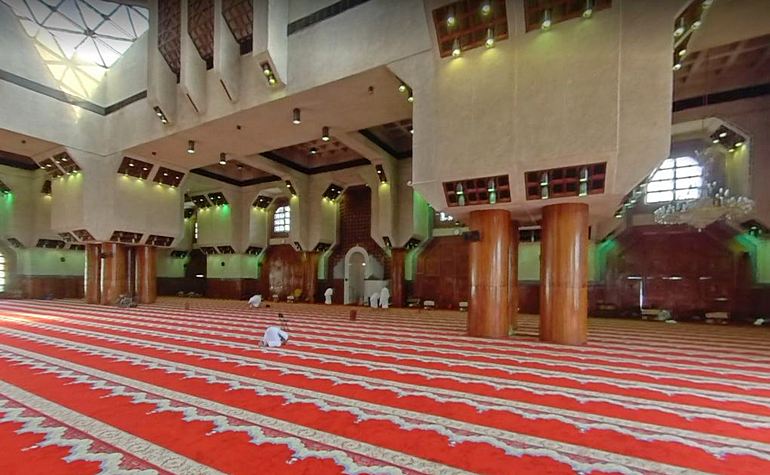
Discover the spiritual Main Prayer Hall of Masjid Aisha in Mecca, Saudi Arabia, a historic Miqat point for Umrah pilgrims. Learn its significance and history.
<h2>Overview</h2><p>The Main Prayer Hall within Masjid Aisha, also known as Masjid at-Taneem, is a place of profound spiritual significance located in Mecca, Saudi Arabia. Situated approximately 7.5 kilometers north of Masjid al-Haram, this mosque serves as a vital spiritual waypoint for pilgrims. It is recognized as a 'Miqat', a designated boundary point where pilgrims intending to perform Umrah from within Mecca enter the sacred state of Ihram. The prayer hall, the heart of this mosque, is designed to accommodate thousands comfortably, offering a serene and spacious environment for worship and reflection.</p><p>For many, Masjid Aisha represents not just a physical structure, but a spiritual threshold, a place where intentions are renewed and a deeper connection to their faith is sought. Its strategic location makes it the most accessible Miqat for residents and visitors already in Mecca who wish to undertake an additional Umrah. The atmosphere within its main prayer hall is one of quiet devotion, preparing individuals for the sacred rites ahead.</p><h2>History & Cultural Background</h2><p>Masjid Aisha holds a unique and poignant place in Islamic history, directly linked to Aisha bint Abu Bakr (RA), the beloved wife of Prophet Muhammad (PBUH). During the Farewell Hajj, Aisha (RA) experienced menstruation, which prevented her from completing certain Umrah rituals. Out of compassion, Prophet Muhammad (PBUH) instructed her brother, Abdur-Rahman, to take her to Taneem (the location of the current mosque) so she could enter Ihram there and perform a separate Umrah after her menses ended.</p><p>This historical event established Taneem as a legitimate Miqat, allowing those within the Haram boundaries to exit, enter Ihram, and then return to perform Umrah. The mosque was later named Masjid Aisha in her honor, forever connecting the site to her devotion and the Prophet's guidance. This story highlights the flexibility and mercy within Islamic teachings, ensuring that worship remains accessible even under challenging circumstances.</p><h2>What Makes It Special</h2><p>The Main Prayer Hall of Masjid Aisha is exceptional due to its dual role: a place of tranquil worship and a practical gateway for Umrah. Its spacious design, characterized by modern Islamic architecture with simple yet elegant white domes, provides a sense of peace and grandeur. The large minarets stand tall, guiding pilgrims from a distance.</p><p>Beyond its aesthetic, the hall is supported by excellent facilities crucial for pilgrims. These include clean restrooms, ample wudu (ablution) stations, and showers, all essential for ritual purification before entering Ihram. This thoughtfulness ensures that pilgrims can comfortably and properly prepare themselves, both physically and spiritually, for their sacred journey to the Kaaba. The mosque's accessibility as the closest Miqat to Mecca simplifies the process for those undertaking multiple Umrahs, making it an indispensable part of their pilgrimage experience.</p><h2>Stories, Fun Facts & Local Details</h2><p>The story of Aisha's (RA) journey to this location is more than just a historical account; it's a narrative that resonates deeply with pilgrims. It's a reminder of her strong faith and the Prophet's understanding, creating a personal connection for every visitor. When pilgrims stand in the Main Prayer Hall, they are literally walking in the footsteps of revered figures from early Islam, enhancing the spiritual weight of their intentions.</p><p>A fun fact for travelers is that while some may believe performing Umrah from Masjid Aisha is 'lesser' than from other Miqats, Islamic scholars affirm its full legitimacy. It's also known by other names like Masjid at-Taneem or Masjid Umrah. The mosque's popularity means it's often bustling, especially during peak seasons, yet the prayer hall maintains an atmosphere of focused devotion. Local buses frequently transport pilgrims to and from this mosque, making it easily reachable for everyone.</p><h2>Visitor Perspective</h2><p>For a visitor, stepping into the Main Prayer Hall of Masjid Aisha is an experience filled with anticipation and devotion. The spacious interior, often filled with the soft murmurs of prayer and supplication, provides a moment of calm before the spiritual intensity of Umrah. Here, pilgrims perform two rak'ahs of nafl (voluntary) prayer, an act that spiritually prepares them and signifies their humility and devotion.</p><p>Many describe feeling a profound sense of peace and renewed purpose. It's a place where the intention, or 'niyyah', for Umrah is firmly set, transforming the pilgrim's mindset. The journey to Masjid Aisha, the preparation within its halls, and the subsequent return to Masjid al-Haram for Tawaf and Sa'i form a seamless spiritual sequence, deeply enriching the overall pilgrimage experience. The hall acts as a final personal sanctuary before embarking on the core rituals of Umrah, imbuing the journey with deeper meaning and spiritual readiness.</p>
Location
Coordinates: 39.8013, 21.4677
View on Google Maps