Main Hall of Chi Lin Nunnery
Hong Kong, China

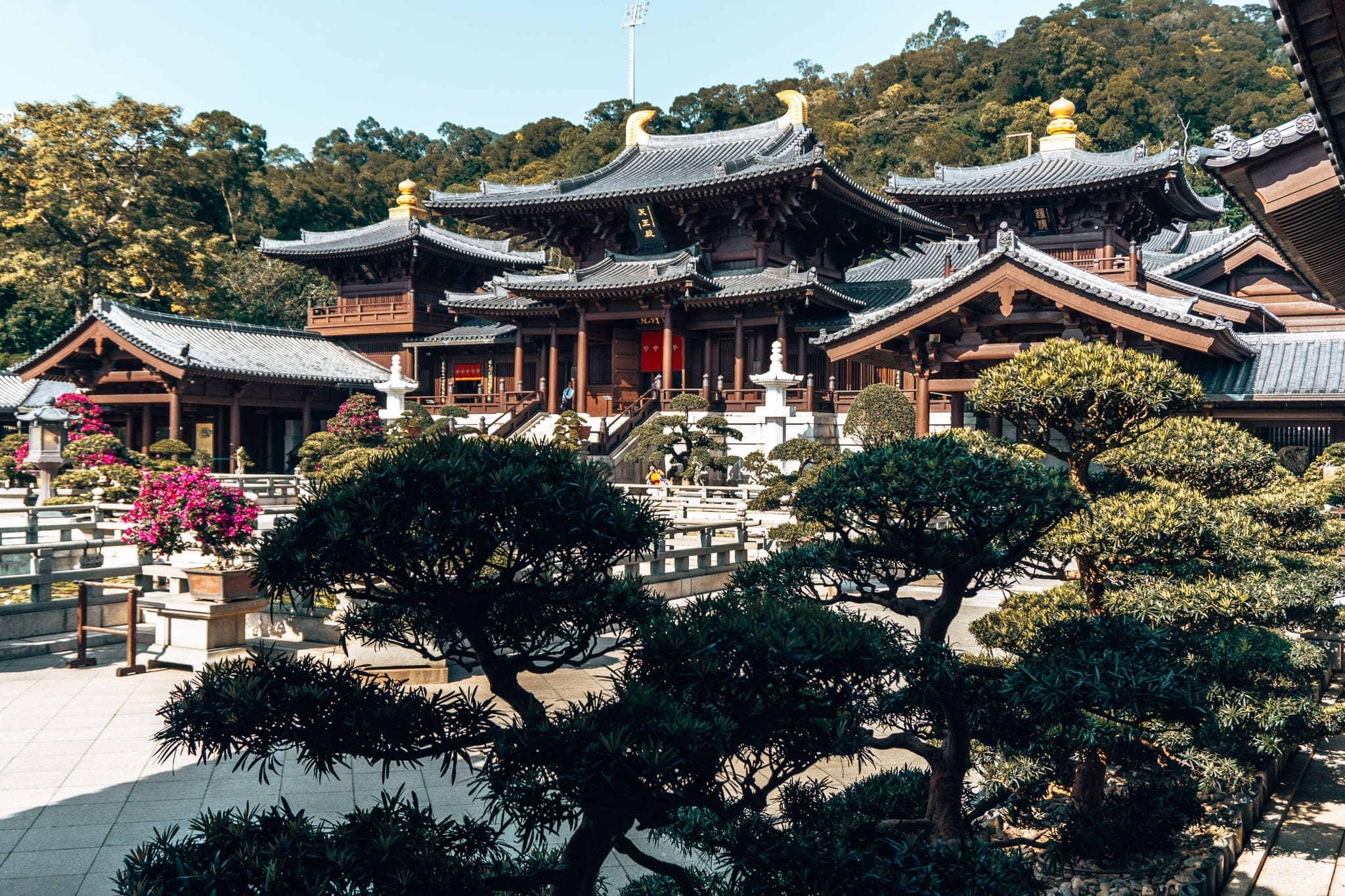
Discover the tranquil Main Hall of Chi Lin Nunnery in Hong Kong, China. Admire its unique Tang Dynasty, nail-less wooden architecture and serene Buddhist statues.
<h2>Overview</h2><p>Nestled amidst the bustling urban landscape of Diamond Hill in Kowloon, Hong Kong, the Main Hall of Chi Lin Nunnery stands as a breathtaking testament to traditional Chinese architecture and profound spirituality. This serene Buddhist monastic complex, renowned for its exquisite Tang Dynasty design, offers a tranquil escape from the city's vibrant energy. The Main Hall, a central feature of the nunnery, is a focal point for worship and contemplation. It is an integral part of the larger Chi Lin Nunnery complex, which seamlessly connects to the equally picturesque Nan Lian Garden, forming a harmonious cultural and natural haven. Admission to the nunnery and its halls, including the Main Hall, is free of charge, inviting all curious travelers to experience its unique beauty and peaceful ambiance.</p><h2>History & Cultural Background</h2><p>The Chi Lin Nunnery was originally founded in 1934 by Buddhist nuns Ven. Kok Yat and Ven. Wai Um, and by 1948, it expanded into a 'conglin,' a Buddhist monastery exclusively for nuns. Historically, the nunnery played a vital social role, providing services like schooling, orphanages, and elderly care, particularly during periods of significant migration to Hong Kong.</p><p>However, the complex as it stands today is largely the result of an ambitious redevelopment project initiated in 1994 and completed in 2000. This reconstruction meticulously followed the architectural style of China's Tang Dynasty (618-907 AD). The design was inspired by ancient blueprints, including the 'Amitayurdhyana Sutra Transformation Painting' found in Cave 172 of the Mogao Grottoes in Dunhuang, and modelled upon the timber structure of the East Main Hall of Foguang Temple in Wutai Mountain. This commitment to historical authenticity ensured that the rebuilt nunnery faithfully represents a classical Tang monastic complex.</p><h2>What Makes It Special</h2><p>The Main Hall of Chi Lin Nunnery is an extraordinary architectural marvel, primarily distinguished by its construction entirely from cypress wood without the use of a single nail. This traditional Chinese building technique relies on an intricate interlocking system of wooden components and dowels, a method that showcases exceptional craftsmanship and emphasizes harmony with nature. It is widely considered the world's largest handmade wooden building of its kind.</p><p>The grandeur of the Main Hall is striking, featuring high ceilings supported by twenty-eight cedar columns. Its roof, made of approximately 28,000 clay tiles, weighs a remarkable 176 tons, with the weight ingeniously distributed through the sophisticated bracketing system. Inside, the hall enshrines several gilded statues, including the central Sakyamuni Buddha, flanked by the Bodhisattvas Manjusre and Samantabhadra, and the Buddha's followers Mahakasyapa and Ananda. This space is not merely a display of art but a vibrant center for religious activities and spiritual practice, marking the furthest point within the nunnery where laypeople can enter for worship.</p><h2>Stories, Fun Facts & Local Details</h2><p>The name 'Chi Lin' translates to 'lotus aspiration,' a fitting moniker as the lotus flower symbolizes purity and enlightenment in Buddhism. This symbolism is beautifully integrated into the nunnery's design, particularly evident in the serene lotus ponds found within its courtyards. The entire complex, covering over 33,000 square meters, was meticulously planned according to strict Feng Shui principles, ensuring an auspicious alignment that faces the sea and is backed by mountains, inviting strength and positive energy.</p><p>Beyond the Main Hall, the Chi Lin Nunnery complex includes sixteen halls, a library, a school, a pagoda, a bell tower, and a drum tower, all built in the same nail-less Tang Dynasty style. These structures are the only buildings of this specific Tang style found in modern-day Hong Kong, offering a rare glimpse into ancient Chinese architectural traditions. The nunnery's seamless integration with the adjacent Nan Lian Garden, which it also manages, further exemplifies its commitment to natural beauty and traditional aesthetics. Visitors often note the profound sense of calm and escape it provides from the surrounding urban environment, a unique cultural experience in a bustling city.</p><h2>Visitor Perspective</h2><p>Visiting the Main Hall of Chi Lin Nunnery is a deeply enriching experience, offering a blend of cultural immersion and peaceful reflection. The nunnery is open daily, typically from 9:00 AM to 5:00 PM, and entry is always free. To ensure a respectful visit, dressing modestly, covering shoulders and knees, and maintaining a quiet demeanor are encouraged as it remains an active religious site. While photography is generally permitted in the gardens, it is typically restricted inside the halls and of the sacred Buddha statues to preserve the sanctity of the space.</p><p>The best time to visit is often in the early morning on weekdays to experience the profound tranquility before larger crowds arrive. The nunnery is easily accessible via Hong Kong's MTR system; travelers can take the Kwun Tong Line to Diamond Hill Station and use Exit C1 or C2, followed by a short 5-10 minute walk. This spiritual sanctuary provides a refreshing contrast to the high-rise cityscape, inviting visitors to slow down, appreciate the intricate craftsmanship, and find a moment of peace.</p>
Location
Coordinates: 114.2052139, 22.340725
View on Google Maps