Lower Chapel
Paris, France

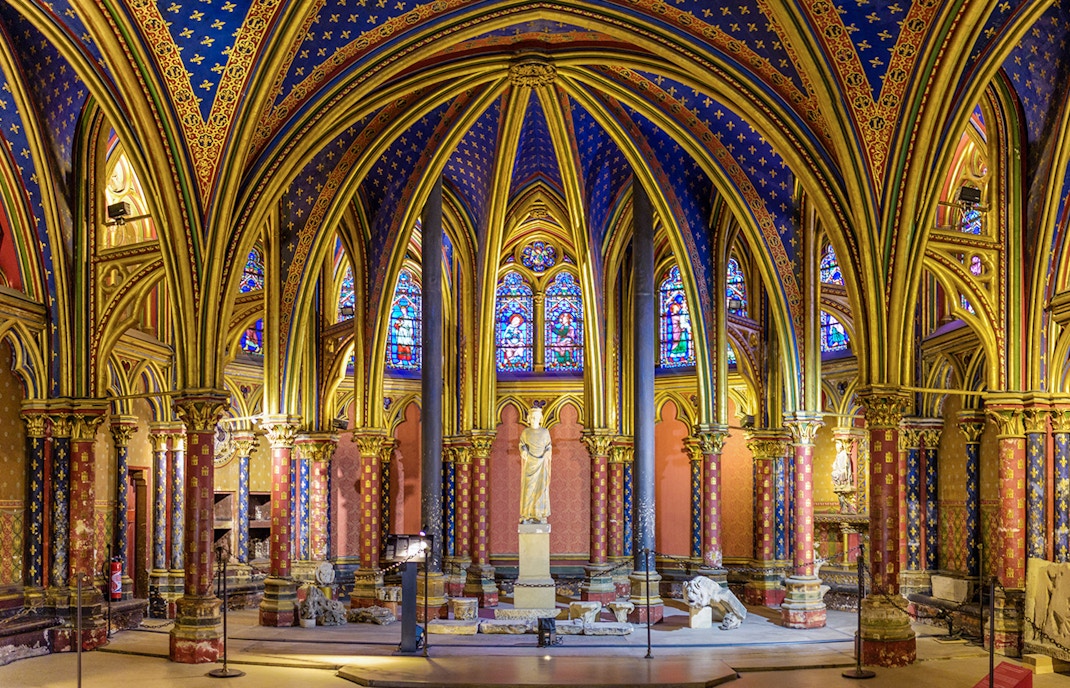
Discover the Lower Chapel of Sainte-Chapelle in Paris, France. Explore its rich history, unique Gothic architecture, and vibrant decorations.
<h2>Overview</h2><p>Nestled beneath the ethereal Upper Chapel, the Lower Chapel, also known as the Chapelle Basse or Chapel of the Virgin, offers a profoundly different yet equally captivating experience within the magnificent Sainte-Chapelle in Paris, France. While its famous counterpart above dazzles with an unparalleled expanse of stained glass, the Lower Chapel grounds visitors in a more intimate and solemn atmosphere. It was conceived as a functional and spiritual space for the royal palace staff and commoners, serving their daily worship in the 13th century. This foundational chapel, consecrated in 1248, is an architectural marvel in its own right, quietly supporting the grandeur above while telling its own rich story through its vibrant polychrome decorations and unique structural elements.</p><h2>History & Cultural Background</h2><p>The Sainte-Chapelle was commissioned by King Louis IX, later Saint Louis, to house his extraordinary collection of Passion relics, including the Crown of Thorns. Construction began after 1238, with the chapel being consecrated on April 26, 1248. While the Upper Chapel was exclusively for the king, his family, and distinguished guests to venerate these sacred relics, the Lower Chapel was designed as the parish church for the approximately 50 members of the royal household's staff and other palace inhabitants. Its creation was part of Louis IX's grand vision to establish Paris as a 'New Jerusalem,' a beacon of Western Christianity, with Sainte-Chapelle serving as a monumental reliquary. Over centuries, the Lower Chapel endured significant challenges, including damage from floods and neglect. During the tumultuous French Revolution in 1789, it was unceremoniously used as a grain store and later as a legal archive. This period saw the chapel stripped of some of its original elements, leading to extensive restoration efforts in the 19th century aimed at returning it to its 13th-century appearance.</p><h2>What Makes It Special</h2><p>The Lower Chapel stands apart with its distinctive Gothic architecture, characterized by low vaulted ceilings with elegant ribbing that create a sense of intimacy and profound reverence. Unlike the towering expansiveness of the Upper Chapel, this space maintains a crypt-like ambiance, primarily due to its comparatively lower height. Its interior is a vibrant tapestry of color, with painted arches and columns. The ceiling, often described as a celestial vault, is adorned with golden fleur-de-lis, the emblem of the French monarchy, set against an azure background. Interspersed with these royal symbols are castles on a red background, a subtle but meaningful homage to Blanche of Castile, King Louis IX's mother. A prominent statue of the Virgin Mary also graces the chapel, underscoring its dedication. Architecturally, the Lower Chapel is an engineering marvel, as it bears the immense weight of the Upper Chapel. Its construction required dividing the space into a main nave and side aisles, all vaulted at the same height. This necessitates unusual horizontal struts to manage the thrust of the main vault, a feature that may be unique in Gothic architecture. The smaller windows allow a subdued, almost mystical light to filter in, contrasting sharply with the dazzling luminosity of the upper level.</p><h2>Stories, Fun Facts & Local Details</h2><p>Beyond its architectural beauty, the Lower Chapel holds fascinating stories. Imagine the daily lives of the palace staff, from cooks to scribes, gathering in this very space for prayer, their routines intertwined with the solemn rituals performed by the king above. The rich decoration, even in this 'lesser' chapel, served as a constant visual reminder of the divine right of the monarchy and the sacred connection between the royal family and their people. A poignant historical detail is its transformation during the French Revolution. The desecration of its sacred function, first as a grain store and then as a storage area for legal archives, highlights the radical shifts in French society. Yet, it survived, and the extensive 19th-century restoration became a significant undertaking, essentially rebuilding much of its artistic embellishment without complete ancient sources, meaning today's visitors see a meticulously imagined 13th-century grandeur. The atmosphere, described as 'intimate and solemn,' allows for quiet contemplation, offering a stark contrast to the more public spectacle of the Upper Chapel.</p><h2>Visitor Perspective</h2><p>For the curious traveler, the Lower Chapel provides an essential counterpoint to the Upper Chapel's overwhelming spectacle. Descending into this space, you step into a different world—one of muted light, intricate details, and a powerful sense of history. It invites visitors to slow down and appreciate the craftsmanship that went into every corner, from the painted columns to the vaulted ceilings. This is where you can truly feel the foundations of Sainte-Chapelle, both literally and figuratively. It offers a moment of quiet reflection, allowing one to consider the chapel's dual purpose and the lives of those who worshipped here centuries ago. The Lower Chapel is not merely a prelude to the main event; it is a destination in itself, offering a profound sense of cultural and historical immersion that deepens the overall understanding and appreciation of Sainte-Chapelle as a whole.</p>
Location
Coordinates: 2.34483, 48.855358
View on Google Maps