Louvre Pyramid
Paris, France

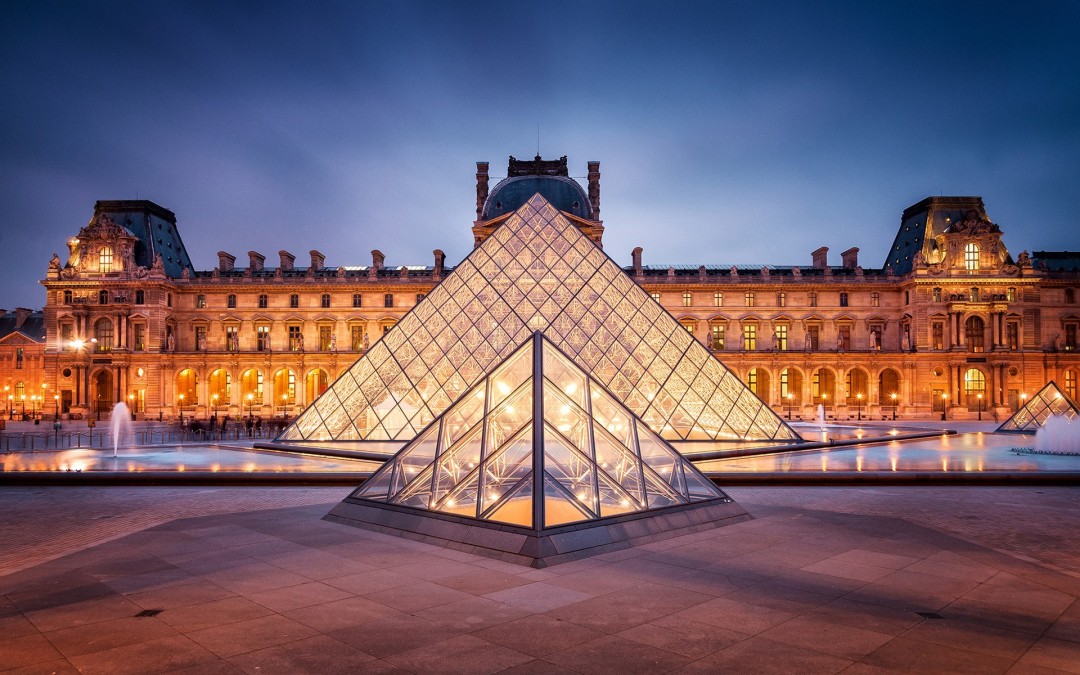
Explore the iconic Louvre Pyramid in Paris, France – a glass marvel at the entrance of the Louvre Museum, blending history and modern design.
<h2>Overview</h2><p>Standing proudly in the heart of Paris, France, the Louvre Pyramid serves as the iconic main entrance to the world-renowned Louvre Museum. Designed by the visionary Chinese-American architect I. M. Pei, this striking glass and metal structure was completed in 1989, instantly becoming a symbol of modernity amidst classical Parisian grandeur. Its primary purpose was to revolutionize the museum's visitor experience, efficiently managing the millions who flock annually to explore its treasures. The pyramid's transparent facets allow natural light to flood the underground reception area, creating a welcoming gateway to centuries of art and history.</p><h2>History & Cultural Background</h2><p>The story of the Louvre Pyramid begins in 1981 when then-French President François Mitterrand initiated the ambitious 'Grand Louvre' project. The Louvre Museum, housed in a historic palace dating back to the 12th century, was struggling to accommodate its ever-growing number of visitors with its outdated entrance facilities. Mitterrand personally selected I. M. Pei for the monumental task, a choice that proved controversial at the time, partly because Pei was not French and his modern design clashed with the traditional French Renaissance architecture of the palace. Critics voiced strong opposition, some describing the structure as 'an architectural joke' or an 'Egyptian symbol of death' out of place in Paris. Despite the initial outcry, often dubbed the 'pyramid polemic,' construction proceeded. The main pyramid was completed in late 1987, and its public opening followed in 1988, with the vast underground lobby becoming fully operational in 1989. Over time, the pyramid transcended its controversial beginnings to become a beloved and recognizable landmark, representing a harmonious blend of historical heritage and architectural audacity.</p><h2>What Makes It Special</h2><p>The Louvre Pyramid's uniqueness lies in its revolutionary design and ingenious functionality. Rising to a height of 21.6 meters (71 feet) with a square base measuring 34 meters (112 feet) on each side, it is composed of 603 rhombus-shaped and 70 triangular glass panes, all supported by a lightweight metal framework of steel and aluminum. A significant innovation was the development of special crystal-clear glass by the French manufacturing company Saint-Gobain, ensuring complete transparency without the typical greenish tint found in most glass. This allows an uninterrupted view of the historic palace from within and bathes the underground spaces in natural light. The pyramid functions as the main entrance, directing visitors to a spacious underground foyer, known as the Hall Napoléon. From this central hub, visitors can easily access the museum's three main wings: Denon, Richelieu, and Sully. Beyond the main pyramid, Pei's design also includes three smaller pyramids that act as skylights, and the intriguing 'Pyramide Inversée' (Inverted Pyramid), located in the Carrousel du Louvre shopping mall below, which further illuminate the underground areas.</p><h2>Stories, Fun Facts & Local Details</h2><p>The Louvre Pyramid is steeped in fascinating stories and details. One enduring urban legend suggests the pyramid is made of exactly 666 glass panes, a number often associated with the 'number of the beast.' However, the Louvre museum itself has confirmed the actual count to be 673 panes (603 rhombi and 70 triangles), debunking this popular myth that originated from an official brochure published during construction. I. M. Pei approached the project with immense dedication, reportedly studying the museum for two years as an ordinary visitor to fully grasp its essence before beginning his design. Despite its modernist appearance, some architectural historians note that Pei's choice of a pyramid aligns with certain French Neoclassical traditions and garden planning principles, allowing it to integrate with its palatial context more subtly than initially perceived. Another fun fact is how the pyramid's unique structure necessitated the creation of a remote-controlled robot specifically designed to climb and clean its sloping glass surfaces. The pyramid's impact has been immense; it has been credited with significantly increasing the Louvre's annual visitor count, transforming it into the world's most visited museum.</p><h2>Visitor Perspective</h2><p>Approaching the Louvre Pyramid is an experience that often evokes a sense of wonder. The sharp, contemporary lines of glass and steel provide a dramatic contrast against the ornate, centuries-old facades of the Louvre Palace. The reflections on its glass surfaces constantly change with the light, offering dynamic and captivating views, making it a favorite subject for photographers. Upon entering, visitors descend into the spacious and brightly lit underground lobby, the Hall Napoléon, which is far from a mere utilitarian space. It functions as a central reception area, housing ticketing booths, information desks, security checkpoints, and amenities, efficiently distributing visitors to the various wings of the museum. This design was a crucial solution to the museum's previous bottlenecks, providing a clear and logical flow for navigating the vast collections. For a smooth visit, especially during peak times, it is highly recommended to purchase tickets online in advance. While the pyramid is the primary entrance, visitors should be aware of other access points like the Passage Richelieu, which is often used for groups with reservations, or the Carrousel du Louvre for alternative entry.</p>
Location
Coordinates: 2.3376, 48.8606
View on Google Maps