Islamic Calligraphy
Istanbul, Turkey

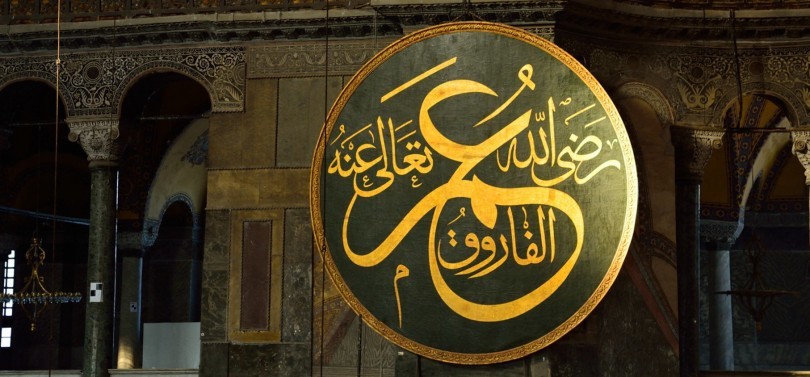
Explore the majestic Islamic calligraphy, especially the giant roundels, within Hagia Sophia in Istanbul, Turkey, revealing centuries of history.
<h2>Overview</h2><p>Stepping into the Hagia Sophia in Istanbul, Turkey, visitors are immediately captivated by a blend of Byzantine grandeur and Ottoman artistry. Amidst the soaring domes and ancient mosaics, the Islamic calligraphy stands as a profound testament to the structure's layered history. Most notably, eight colossal calligraphic roundels dominate the main prayer hall, presenting a striking visual dialogue between two major world cultures. These magnificent panels, adorned with golden Arabic inscriptions on dark backgrounds, offer clear explanations of Islamic tenets and serve as both a spiritual beacon and an artistic marvel within this architectural icon.</p><p>Beyond the prominent roundels, various other calligraphic elements, often executed in gold leaf on a blue background, complement the existing Byzantine artwork, including verses from the Quran and the names of significant figures in Islam. The sheer scale and intricate beauty of these calligraphic works make them an unmissable feature for any traveler exploring the Hagia Sophia's rich heritage, showcasing the enduring power of sacred art.</p><h2>History & Cultural Background</h2><p>The history of Islamic calligraphy within the Hagia Sophia is intrinsically linked to its transformation from a Byzantine cathedral to an Ottoman mosque. After the Ottoman conquest of Constantinople in 1453, Sultan Mehmed II converted the Hagia Sophia into a mosque, marking a significant shift in its artistic narrative. While many original Christian mosaics were plastered over to adhere to Islamic iconoclastic principles, some were left visible or later uncovered. Islamic calligraphic elements were gradually introduced, reflecting the building's new religious purpose.</p><p>The most iconic calligraphic additions, the immense wooden roundels, were installed much later, during extensive renovations between 1847 and 1849. These restorations were overseen by Swiss architects Gaspare and Giuseppe Fossati, under the patronage of Sultan Abdülmecid I. The renowned Ottoman calligrapher Kazasker Mustafa İzzet Efendi was commissioned to create these masterpieces. Before his works, earlier calligraphic plates by Teknecizâde İbrahim Efendi from the 17th century had adorned the building. The introduction of these calligraphic elements was not merely decorative; it was a profound statement of the change in the religious, cultural, and political landscape of Istanbul.</p><h2>What Makes It Special</h2><p>The Islamic calligraphy in Hagia Sophia is special due to several remarkable characteristics. Foremost are the eight enormous roundels, each measuring over 7 meters (approximately 24 feet) in diameter, making them among the largest calligraphic panels in the Islamic world. These panels are crafted from wood, possibly reinforced with treated animal skin for elasticity and durability, and feature gold Arabic inscriptions against a black background.</p><p>What truly sets them apart is their content and placement. They bear the names of Allah (God), the Prophet Muhammad, his grandsons Hasan and Hussein, and the four Rightly Guided Caliphs: Abu Bakr, Umar, Uthman, and Ali. Their strategic positioning at the four corners of the central square beneath the great dome and on the main walls ensures they visually dominate the expansive nave. This placement creates a powerful visual and theological statement, clearly articulating the building's identity as a mosque while coexisting with the underlying Byzantine architecture and remaining Christian mosaics.</p><h2>Stories, Fun Facts & Local Details</h2><p>The calligraphic roundels of Hagia Sophia hold fascinating stories. One of the most endearing anecdotes revolves around their incredible size. When Hagia Sophia was converted into a museum in 1935, there were intentions to remove these large panels. However, they were so massive—almost as large as a city bus—that they literally could not fit through the doors. Consequently, they were left in place, becoming an integral and iconic part of the building's visual identity, a testament to their enduring presence and physical grandeur.</p><p>Another detail visitors often notice is that the medallions are not flush against the walls; they are suspended by a chain system, causing them to slope slightly downwards. This ingenious design allows for easier readability of the inscriptions from the ground level and adds a dramatic, almost floating, effect. The craftsmanship of Kazasker Mustafa İzzet Efendi, who inscribed these roundels, is celebrated as poetry in motion, reflecting the artistic and spiritual ethos of the Ottoman era. Visitors to Hagia Sophia experience a unique journey through time, where each mosaic and calligraphic panel tells a story, waiting to be discovered.</p><h2>Visitor Perspective</h2><p>For a curious traveler, encountering the Islamic calligraphy in Hagia Sophia is an awe-inspiring experience. The colossal roundels immediately draw the eye upwards, their golden script shimmering against the dark background. They provide a dramatic contrast to the ancient Christian mosaics, creating a powerful visual dialogue between the two faiths that have shaped this monumental structure. This interplay of Christian and Islamic artistry under one roof is often cited as one of the most compelling aspects of visiting Hagia Sophia.</p><p>As you explore, take time to appreciate the intricate details of the Thuluth script used by master calligraphers like Kazasker Mustafa İzzet Efendi. The calligraphy is not merely decorative; it carries deep theological significance, filling the sacred space with a profound symbolic presence. Observing how these relatively newer additions harmoniously coexist with the 6th-century Byzantine architecture underscores Hagia Sophia's unique ability to adapt and evolve while remaining a sacred space. The calligraphy invites contemplation, offering insights into centuries of religious and cultural evolution within this truly global heritage site.</p>
Location
Coordinates: 28.98, 41.00833
View on Google Maps