Gansevoort Woodland & Southern Entrance
New York, United States

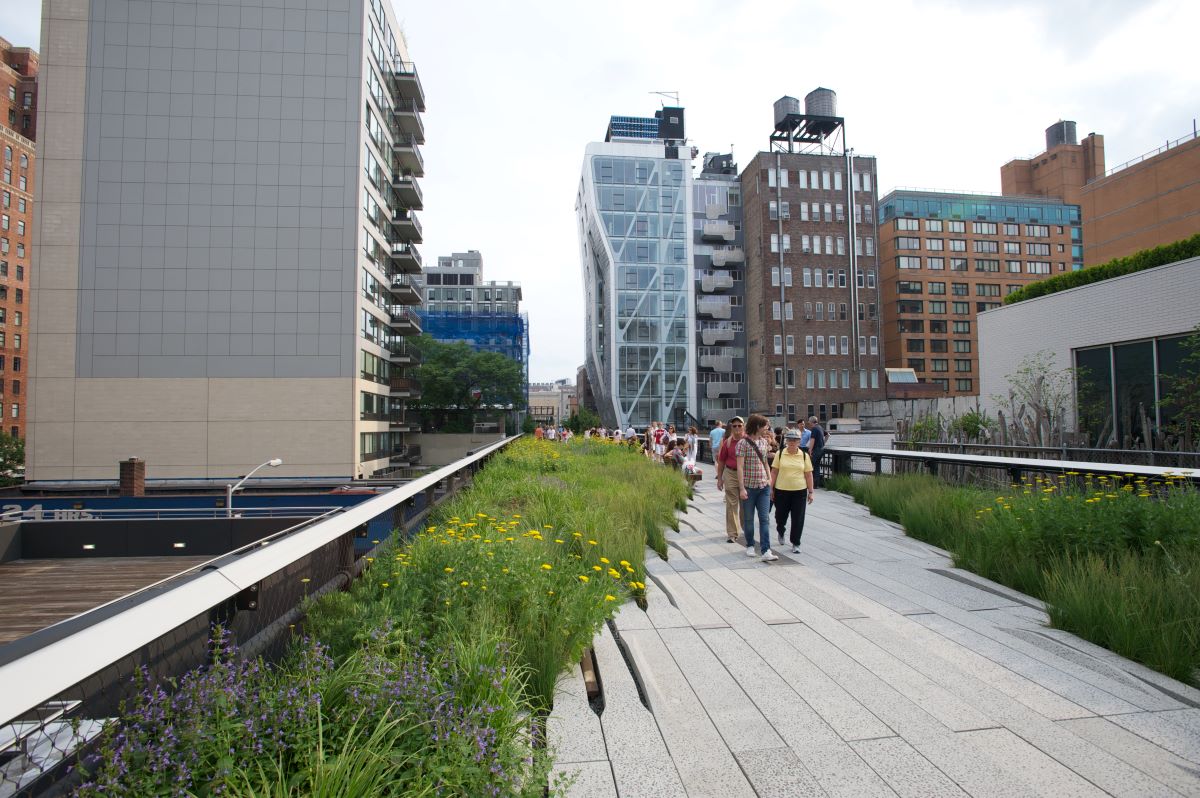
Explore the Gansevoort Woodland & Southern Entrance, the lush gateway to the High Line in New York, United States. Discover its unique history and natural beauty.
<h2>Overview</h2><p>Stepping onto the Gansevoort Woodland & Southern Entrance of the High Line in New York, United States, travelers are immediately enveloped in a tranquil escape that belies its urban surroundings. This verdant stretch marks the southern gateway to Manhattan's celebrated elevated park, offering a unique blend of lush nature and industrial heritage. Situated in the historic Meatpacking District, this entrance provides a serene introduction to the High Line's distinctive landscape, inviting visitors to ascend from the bustling city streets into a world reclaimed by flora. The Gansevoort Woodland serves as a starting point for an unforgettable journey, where the past and present of New York converge in a beautifully re-imagined public space.</p><h2>History & Cultural Background</h2><p>The High Line's story begins with its origins as an elevated freight rail line, part of the West Side Line, constructed in the 1930s. This marvel of engineering was designed to lift dangerous train traffic off the streets of Manhattan's industrial districts, particularly serving the meatpacking industry. For decades, it was a vital artery for moving goods, with trains carrying meat, milk, and other products directly into warehouses and factories. However, as freight trucking became dominant, the railway's use declined, and the last train ran in 1980.</p><p>For nearly two decades, the structure lay abandoned, becoming an accidental landscape where wild plants took root, creating a unique urban wilderness. This derelict state, however, put it at risk of demolition. In 1999, a group of local residents founded 'Friends of the High Line' with the vision to preserve and transform this relic into an elevated public park. Their efforts, in partnership with the City of New York, led to the High Line's phased opening, with the Gansevoort Woodland & Southern Entrance being part of the inaugural section that opened in June 2009.</p><p>The cultural significance extends to its location in the Meatpacking District, an area rich in history. Gansevoort Street itself has a deep past, originally tracing a Lenape footpath before being named after Revolutionary War General Peter Gansevoort in 1837. The transformation of the High Line not only saved a piece of industrial heritage but also sparked urban revitalization, influencing similar projects worldwide.</p><h2>What Makes It Special</h2><p>The Gansevoort Woodland stands out as a vibrant example of 'agri-tecture,' a blend of agriculture and architecture that defines the High Line's design philosophy. It's characterized by a thicket of trees, predominantly grey birch and serviceberry, along with various grasses and wildflowers. These plantings are not arbitrary; they are inspired by the self-seeded landscape that flourished on the abandoned tracks, creating an intentional wildness. Raised steel planters provide ample depth for the trees' root systems, allowing for a substantial green canopy.</p><p>One of its most special aspects is the immediate sense of immersion. As visitors ascend, the steel beams of the original railway often frame the ascent, leading them directly into a beautiful, green woodland. The cascading vines over the High Line railing create a 'lush, green balcony' that is visible to those on the street below. This section offers compelling views of the Meatpacking District, the Hudson River, and the New Jersey Palisades, providing a fresh perspective on the city's dynamic landscape.</p><h2>Stories, Fun Facts & Local Details</h2><p>The planting design throughout the High Line, including the Gansevoort Woodland, was spearheaded by Dutch garden designer Piet Oudolf, known for his 'new perennial' movement that emphasizes naturalistic planting and plants that look good through all seasons. The selection of over 200 species across the High Line focuses on hardiness, adaptability, and seasonal variation. For instance, the grey birch found here is a pioneer species often seen in old industrial areas, connecting directly to the High Line's past. Other native plants like winterberry holly and flowering dogwood also thrive in this section, contributing to its ecological richness.</p><p>A fun fact for history buffs: Gansevoort Street's history predates the High Line significantly, tracing back to a Lenape footpath. The area was once known for its bustling meat markets, with the High Line facilitating freight transport directly into those businesses. Today, while the trains are gone, the spirit of transformation and connection remains.</p><h2>Visitor Perspective</h2><p>For many visitors, the Gansevoort Woodland & Southern Entrance offers a critical transition point. Ascending the stairs or elevator at Gansevoort Street is like entering a portal, leaving the urban cacophony behind for a momentary embrace of nature. The canopy of birch trees creates intricate patterns of light on the path, and the dense, low ground covers evoke the wildness that once spontaneously grew on the tracks. It provides a quiet, protected area perfect for contemplation, a leisurely stroll, or simply soaking in the unique atmosphere. It’s also notable for being one of the accessible entry points with an elevator, making it welcoming for all. This southern start sets a contemplative tone for the rest of the High Line experience, gently guiding travelers from the historical roots of the Meatpacking District into the elevated park's unfolding narrative.</p>
Location
Coordinates: -74.006959, 40.74354
View on Google Maps