Fort Wood
New York, United States

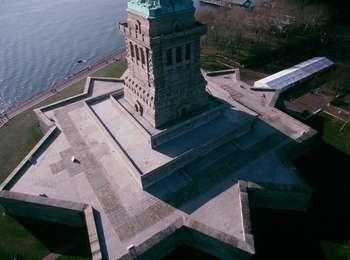
Discover Fort Wood, the historic star-shaped military fort beneath the Statue of Liberty in New York, United States. Explore its unique past and current role as a symbol of freedom and welcome.
<h2>Overview</h2><p>Nestled on Liberty Island in New York Harbor, Fort Wood serves as a remarkable and often overlooked foundation for one of the world's most enduring symbols of freedom: the Statue of Liberty. What many visitors perceive simply as the Statue's pedestal is, in fact, a historic military fortification with a storied past. This eleven-pointed star-shaped fort offers a unique blend of military history and monumental art, providing a stable base for Lady Liberty and a rich historical context to her presence. It stands as a testament to America's evolving narrative, from a defensive outpost to a welcoming beacon for immigrants and a symbol of democratic ideals in New York, United States.</p><h2>History & Cultural Background</h2><p>The story of Fort Wood begins long before the arrival of the Statue of Liberty. Constructed between 1807 and 1811 on what was then known as Bedloe's Island, this formidable structure was part of an extensive coastal defense system designed to protect New York Harbor from potential invasions, particularly during the War of 1812. Its distinctive eleven-pointed star shape was a popular design for military fortifications of the era, influenced by French military engineering principles, intended to maximize defensive capabilities and eliminate blind spots.</p><p>Initially, the fort was unnamed, but it was later officially designated Fort Wood in 1814, honoring Lieutenant Colonel Eleazer Wood, an American Army engineer who tragically died during the Siege of Fort Erie in the War of 1812. For decades, Fort Wood functioned as a vital military post, though its direct involvement in combat was limited. By the mid-19th century, with advancements in artillery technology, the fort's strategic importance waned, and it became largely disused, serving for a time as a recruiting station during the Civil War.</p><p>The fort found its new, iconic purpose in the late 19th century. When France proposed gifting the colossal Statue of Liberty to the United States, a site was needed for its monumental pedestal. Bedloe's Island, with its sturdy, star-shaped Fort Wood, was chosen as the ideal location. The Statue's pedestal was ingeniously integrated within the existing walls of Fort Wood, a design decision that allowed the new structure to benefit from the fort's strong foundations. The construction of the pedestal was completed by April 1886, with the Statue of Liberty formally dedicated later that year.</p><p>In 1924, Fort Wood, along with the Statue of Liberty it cradled, was declared a National Monument, and its administration was transferred to the National Park Service in 1933. The island itself was officially renamed Liberty Island in 1956, further cementing the fort's integral role in the monument's identity.</p><h2>What Makes It Special</h2><p>Fort Wood's enduring legacy lies in its remarkable transformation from a 'fortress of war' to the 'foundation of freedom'. Its eleven-pointed star design is not merely a historical curiosity but an architectural marvel that continues to support one of the world's heaviest and most recognizable statues. This unique shape, designed for optimal defense, now serves a symbolic role, grounding Lady Liberty.</p><p>The fort represents a profound layering of American history. Visitors walking through its pathways are treading on ground that once prepared for battle, but now welcomes millions seeking inspiration. It symbolizes the resilience and adaptability of a nation, repurposing military strength to uphold ideals of liberty and democracy. The very walls that once aimed to keep threats out now invite the world in.</p><h2>Stories, Fun Facts & Local Details</h2><p>One of the most fascinating aspects of Fort Wood is how its original military purpose was so seamlessly adapted to accommodate the Statue of Liberty. The decision to build the Statue's pedestal within the fort's walls was a practical one, utilizing the existing sturdy foundation, but it also created a powerful symbolic connection. Imagine the engineering feat required to construct a new base for the enormous statue inside an old fort.</p><p>The fort's orientation was also significant: the Statue's foundation and pedestal were aligned to face southeast, strategically positioned to greet ships entering New York Harbor from the Atlantic Ocean. This ensured that Lady Liberty would be the first grand welcome for countless immigrants arriving in America, a role further immortalized by Emma Lazarus's poem 'The New Colossus', inscribed on a plaque within the pedestal, inviting the 'huddled masses yearning to breathe free'.</p><h2>Visitor Perspective</h2><p>For travelers to the Statue of Liberty, visiting the Fort Wood section is an integral part of the experience. Access to the pedestal of the Statue of Liberty means exploring what remains of Fort Wood. Within these historic walls, visitors can delve into the Statue of Liberty Museum, learning about the monument's construction, symbolism, and its profound impact on American history.</p><p>The fort's ramparts, now a promenade around the Statue's base, offer breathtaking panoramic views of the Manhattan skyline, Ellis Island, and the vast expanse of New York Harbor. Standing at this vantage point, you can appreciate the scale of both the Statue and its historic foundation, connecting with the dual legacy of protection and welcome. It's a journey not just to an iconic landmark, but into the very foundations of American ideals, rooted in a place of enduring strength.</p>
Location
Coordinates: -74.044502, 40.689247
View on Google Maps