Corinthian Columns
Antalya, Turkey

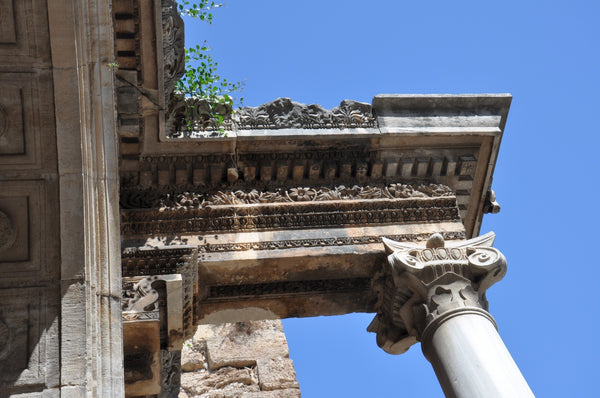
Discover the Corinthian Columns of Hadrian's Gate in Antalya, Turkey. Explore the historical Roman triumphal arch and its intricate architectural beauty.
<h2>Overview</h2><p>Stepping through Hadrian's Gate in Antalya, Turkey, is like traversing a living timeline, and at its heart stand the magnificent Corinthian Columns. This ancient Roman triumphal arch, known locally as Üçkapılar or 'The Three Gates', is not merely a monument; it is a grand preface to the historic Kaleiçi district. Erected in 130 CE to honor the visit of Emperor Hadrian to the city then known as Attaleia, the gate’s elegant structure immediately captures attention. It boasts three majestic arches, each framed by striking columns that embody the sophisticated artistry of Roman architecture. These Corinthian elements, with their intricate detailing, are a primary visual draw, inviting travelers to pause and appreciate the enduring legacy of a powerful empire.</p><h2>History & Cultural Background</h2><p>The story of Hadrian's Gate begins with Emperor Hadrian himself, a well-traveled ruler who left his mark across the Roman Empire. His visit to Attaleia in 130 CE was a significant event, prompting the city to construct this ceremonial gateway. The gate was strategically incorporated into the city's defensive walls, serving as a principal entrance to the bustling ancient settlement. Crafted primarily from gleaming white marble, the gate featured four columns on each of its city-facing and outer facades, with their shafts often made of contrasting granite, symbolizing both strength and refined aesthetics. Originally, the gate was thought to have a second story, possibly adorned with statues of Hadrian and his imperial family, though this upper level has not survived to the present day.</p><p>For centuries, the gate remained obscured, even buried, until its rediscovery by Irish hydrographer Francis Beaufort in 1817. Subsequent excavation in 1882 unveiled its lower sections, leading to a significant restoration in 1959. This restoration involved meticulously installing white marble Corinthian columns, aiming to faithfully recreate the gate's original Roman design, replacing any makeshift supports that had accumulated over time. This diligent work ensures that visitors today can witness a structure that largely reflects its ancient grandeur, a true testament to Roman engineering and artistic ambition.</p><h2>What Makes It Special</h2><p>The Corinthian Columns of Hadrian's Gate are a prime example of Roman architectural prowess and their enduring aesthetic principles. The Corinthian order, celebrated for its ornate and elaborate capitals, typically features delicate acanthus leaves and elegant scrolls. Here, these columns, often with Composite order capitals that subtly blend Ionic volutes with the distinctive acanthus foliage, demonstrate a particularly Roman interpretation of this classical style. They are not merely structural supports; they are decorative masterpieces that contribute significantly to the gate's monumental presence. The floral and rosette reliefs that adorn the three archways further enhance this visual richness, creating a sense of majesty and intricate detail that speaks volumes about the historical period.</p><p>What truly sets these columns apart is their role within the broader context of Hadrian's Gate itself. They frame the pathways through which countless individuals, from emperors to everyday citizens, have passed for nearly two millennia. The contrast between the pristine white marble of the gate and the robust granite of some column shafts adds a visual dynamic, highlighting the Roman dedication to both beauty and durability. As you walk through, you're not just seeing ancient architecture; you're stepping through a threshold designed to impress and declare the power and cultural influence of the Roman Empire.</p><h2>Stories, Fun Facts & Local Details</h2><p>One of the most captivating aspects for visitors is the visible original Roman-era walkway beneath the central arch, protected by perspex flooring. Here, you can observe the remarkably deep grooves worn into the ancient pavement by centuries of carts and chariots. This tangible link to the past offers a vivid glimpse into the daily life of ancient Attaleia, conjuring images of merchants, soldiers, and citizens moving through this very spot. Another intriguing detail is the fate of the original bronze letters. An inscription honoring Hadrian once proudly spanned the gate, but these letters were lost over time, only to be rediscovered scattered and subsequently dispersed among various museums and private collections worldwide during the 19th century. The gate also stands flanked by two towers of differing origins: the Roman-era Julia Sancta Tower to the south, and a northern tower whose upper part was rebuilt by the Seljuk Sultan Alaeddin Keykubat I in the 13th century, showcasing Antalya's layered history.</p><h2>Visitor Perspective</h2><p>Today, Hadrian's Gate, with its elegant Corinthian Columns, serves as a popular and picturesque entrance to Kaleiçi, Antalya's charming old town. It offers a seamless transition from the bustling modern city into a labyrinth of narrow, cobblestone streets, historic houses, and quaint shops. The gate itself is often a hub of activity, a favorite spot for photographers seeking to capture its ancient grandeur bathed in the Mediterranean sun. Visiting early in the morning or late in the afternoon is often recommended to avoid the busiest crowds and to experience the gate's beauty in softer, more evocative light. It's a place where history feels alive, where every arch and column whispers tales of empires past, inviting every traveler to connect with the ancient heart of Antalya.</p>
Location
Coordinates: 30.70851, 36.88523
View on Google Maps