Cascade Complex
Yerevan, Armenia
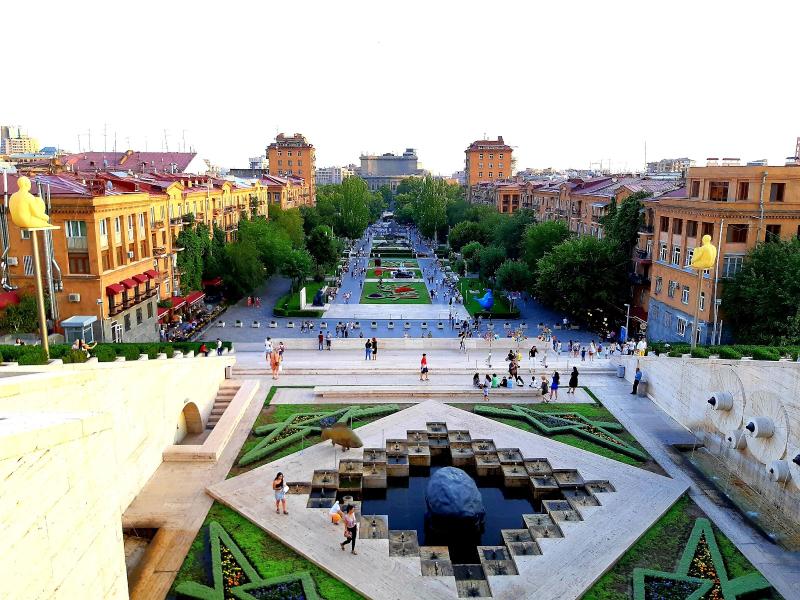
Explore the iconic Cascade Complex in Yerevan, Armenia. Discover its history, art, and panoramic views of the city and Mount Ararat.
<h2>Overview</h2><p>The Cascade Complex in Yerevan, Armenia, is far more than just a grand stairway; it is a monumental architectural masterpiece, an open-air museum, and a vibrant cultural hub. Seamlessly blending art, history, and urban design, this imposing structure connects the city's central Kentron district with the higher Kanaker-Zeytun neighborhood, offering breathtaking panoramic views. With its cascading fountains, meticulously landscaped gardens, and a remarkable collection of contemporary art, the Cascade has become a symbol of Yerevan's resilience and artistic spirit. Visitors can ascend its numerous steps or utilize the convenient indoor escalators to explore the various levels, each revealing new perspectives and artistic treasures. It serves as a popular gathering spot for locals and a must-visit attraction for travelers seeking to immerse themselves in Armenia's unique cultural landscape.</p><h2>History & Cultural Background</h2><p>The genesis of the Cascade Complex dates back to the 1920s, conceptualized in the master plan for Yerevan by the renowned architect Alexander Tamanian. His vision was to forge a green link, adorned with terraces, waterfalls, and gardens, between the city center and the northern hills. However, this ambitious project lay dormant for decades.</p><p>It was in the early 1970s that the idea was revitalized by Yerevan's chief architect, Jim Torosyan, along with Sargis Gurzadyan and Aslan Mkhitaryan. Torosyan reimagined the Cascade not merely as a utilitarian connection but as a dynamic, multifunctional public space where architecture, nature, and art would converge. This reimagining included the integration of exhibition halls, hidden escalators, serene courtyards, and an outdoor sculpture garden. Construction commenced in 1980, but the project faced significant setbacks, halted by the devastating 1988 Armenian earthquake and the subsequent collapse of the Soviet Union. For over a decade, the Cascade stood as an unfinished relic, a stark reminder of the nation's economic hardships during its transition to independence.</p><p>A turning point arrived in 2002 when Armenian-American philanthropist Gerard L. Cafesjian initiated a monumental restoration effort in collaboration with the Yerevan Municipality and the Armenian government. Cafesjian's generous contribution of $128 million breathed new life into the complex, leading to its grand reopening on November 17, 2009. His vision transformed much of the monument into the world-class Cafesjian Center for the Arts, celebrating contemporary art within this historic structure.</p><h2>What Makes It Special</h2><p>The Cascade's uniqueness lies in its ingenious fusion of natural landscape with monumental architecture and fine art. The structure itself is a marvel, comprising 572 exterior steps, traversing a height of approximately 118 meters from base to summit, with a total length of about 302 meters. Inside, a series of escalators provides an accessible alternative to climbing, making the experience enjoyable for everyone.</p><p>Its design beautifully intertwines Soviet modernism with traditional Armenian architectural motifs. Visitors will notice decorative reliefs inspired by khachkars (Armenian cross-stones), grapevines, pomegranates, and the ancient tree of life, all carved into the milky white tuff and travertine stone native to the region. The complex is adorned with a stunning array of contemporary sculptures by internationally acclaimed artists such as Fernando Botero, Lynn Chadwick, Barry Flanagan, and Jaume Plensa, turning every level into an engaging art gallery.</p><p>At its heart, the Cafesjian Center for the Arts houses an impressive collection of over 5,000 works, dedicated to bringing modern and contemporary art to Armenia and showcasing Armenian culture to the world.</p><h2>Stories, Fun Facts & Local Details</h2><p>One of the most captivating aspects of the Cascade is the breathtaking vista it offers. From its upper terraces, on a clear day, visitors are rewarded with unparalleled views of the entire city of Yerevan, framed by the majestic, snow-capped peak of Mount Ararat in the distance—a powerful and sacred symbol for Armenians, despite its current location in Turkey.</p><p>The area around the Cascade is a bustling community hub. At its base, a verdant sculpture garden showcases large-scale artworks, inviting leisurely strolls amidst vibrant flowerbeds. This space is often abuzz with activity, hosting cultural events, concerts, and outdoor film screenings, especially during the warmer months, making it a vibrant focal point for both locals and tourists.</p><p>Interestingly, the Cascade Complex is technically unfinished; the original plans envisioned it extending even further up the hill. Despite this, what stands today is a testament to perseverance and artistic ambition. The monument of Alexander Tamanyan, the original visionary architect, stands proudly at the complex's entrance, gazing over the city he helped shape.</p><h2>Visitor Perspective</h2><p>A visit to the Cascade is an immersive experience that caters to diverse interests. Whether you choose to climb the 572 steps for a vigorous workout and stunning views, or opt for the comfort of the indoor escalators, the journey is rewarding. The outdoor complex, including the steps and sculpture garden, is freely accessible 24/7, making it perfect for a sunrise stroll or a romantic sunset viewing.</p><p>The Cafesjian Center for the Arts offers free general entry, though some special exhibition galleries inside may require a modest admission fee, typically open on weekends. Many visitors recommend coming around sunset to witness the city lights twinkle to life and catch the golden hour glow on Mount Ararat. Comfortable shoes are highly advisable for those planning to tackle the stairs. With numerous cafes and seating areas at its base and along its terraces, the Cascade is an ideal place to relax, people-watch, and absorb the unique atmosphere of Yerevan.</p>
Location
Coordinates: 44.51556, 40.19111
View on Google Maps