Burj Khalifa
Dubai, United Arab Emirates

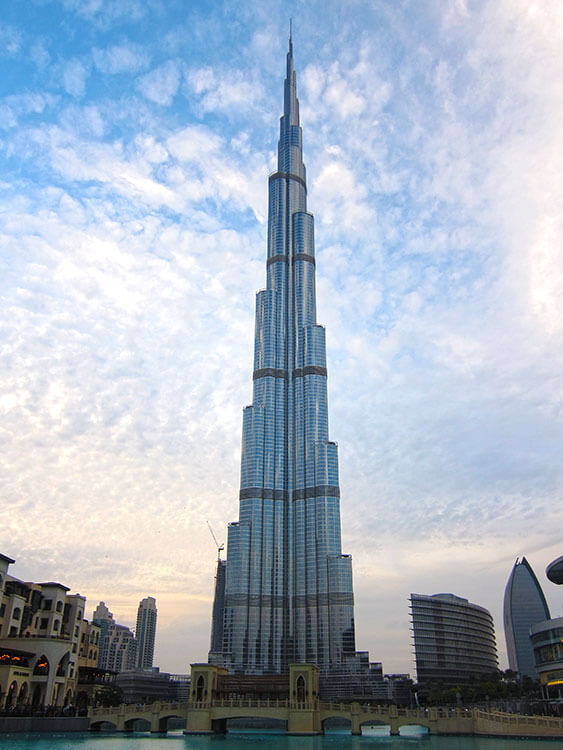
Explore the iconic Burj Khalifa in Dubai, United Arab Emirates, the world's tallest building. Discover its history, unique design, and visitor experiences.
<h2>Overview</h2><p>Soaring majestically into the sky, the Burj Khalifa in Dubai, United Arab Emirates, stands as a global icon and a monumental testament to human ambition and engineering prowess. Reaching a staggering height of 828 meters (2,717 feet), it proudly holds the title of the world's tallest building. This architectural marvel is more than just a skyscraper; it is a vibrant, mixed-use structure housing residential apartments, corporate suites, and the luxurious Armani Hotel Dubai. Its striking silhouette dominates the city's skyline, drawing millions of visitors annually who come to witness its grandeur and experience unparalleled views of the Arabian Gulf and beyond. The Burj Khalifa is the centerpiece of downtown Dubai, embodying the city's rapid development and its vision as a global hub for tourism and commerce.</p><h2>History & Cultural Background</h2><p>The genesis of the Burj Khalifa project emerged in the early 2000s, driven by Dubai's strategic decision to diversify its economy from an oil-based model to one centered on services and tourism. Emaar Properties, a leading real estate developer, spearheaded the ambitious vision to construct the world's tallest man-made structure as the focal point of the newly planned Downtown Dubai district. Construction officially commenced in January 2004, marking the beginning of a monumental undertaking.</p><p>The design, conceived by the American architectural firm Skidmore, Owings & Merrill (SOM) with Adrian Smith as chief architect and Bill Baker as chief structural engineer, draws profound inspiration from Islamic architecture. Its triple-lobed footprint is said to be inspired by the Hymenocallis, a regional desert flower, while its spiraling shape echoes the minarets seen in traditional Middle Eastern structures. Originally known as Burj Dubai, the tower was officially opened on January 4, 2010, and renamed Burj Khalifa in honor of Sheikh Khalifa bin Zayed Al Nahyan, the then President of the UAE and ruler of Abu Dhabi, for his crucial support. This renaming solidified its place not just as an architectural wonder, but as a symbol of national pride and unity.</p><h2>What Makes It Special</h2><p>The Burj Khalifa's distinctiveness lies not only in its record-breaking height but also in the innovative engineering and architectural design that brought it to life. Its unique 'buttressed core' structural system provides the necessary stability for its immense height, cleverly managing wind forces and seismic activity. The Y-shaped floor plan is not merely an aesthetic choice; it maximizes views of the Arabian Gulf and helps to reduce the structural load, contributing to the building's overall stability.</p><p>The construction involved overcoming significant challenges, including the desert's extreme climate. Engineers developed advanced techniques, such as a specialized cooling system for concrete, to ensure its integrity during the building process. The exterior cladding, comprising over 28,000 glass panels, was installed at a record-breaking height, demonstrating unparalleled precision and scale. The tower's sleek, tapering form, culminating in a sculpted spire, creates an iconic silhouette that is instantly recognizable worldwide, making it a true marvel of modern engineering and design.</p><h2>Stories, Fun Facts & Local Details</h2><p>The Burj Khalifa is a repository of fascinating facts and holds numerous world records. It is not only the tallest building but also the tallest freestanding structure, boasting the highest number of stories in any building, with 163 floors. Its elevators are among the fastest in the world, capable of reaching speeds of up to 10 meters per second, and cover the longest travel distance, a staggering 504 meters.</p><p>The construction of this colossal structure was a massive undertaking, requiring over 12,000 workers on-site daily at its peak. It consumed 330,000 cubic meters of concrete, equivalent to the weight of 100,000 elephants, and 39,000 tonnes of steel rebar. The total aluminum used for its facade alone is comparable in weight to five Airbus A380 aircraft.</p><p>Beyond its physical attributes, the Burj Khalifa has become a cultural touchstone. It plays a central role in Dubai's annual New Year's Eve celebrations, where its facade becomes a dazzling canvas for spectacular light shows and fireworks, captivating audiences globally. Its iconic presence has also graced the silver screen, famously featured in action films, including 'Mission: Impossible – Ghost Protocol,' where Tom Cruise himself performed daring stunts on its exterior.</p><h2>Visitor Perspective</h2><p>For visitors, the Burj Khalifa offers an unforgettable journey into the clouds. The primary observation decks, 'At The Top' on levels 124 and 125, provide breathtaking 360-degree panoramic views of Dubai's sprawling cityscape, the vast desert, and the shimmering Arabian Gulf. For an even more exclusive experience, 'At The Top SKY' on the 148th floor was once the world's highest outdoor observation deck, offering an elevated perspective and a more personalized visit with a guest ambassador.</p><p>The ascent itself is part of the adventure, as high-speed elevators swiftly transport guests upwards, providing glimpses of the city below through glass walls. To maximize the experience and avoid larger crowds, it's often recommended to visit during early morning hours or late afternoon. Planning your visit in advance, especially by purchasing tickets online, is advisable to ensure smooth entry and to secure prime viewing times, particularly around sunset, when the city lights begin to twinkle below.</p>
Location
Coordinates: 55.274288, 25.197525
View on Google Maps