Brooklyn Bridge Towers
New York, United States

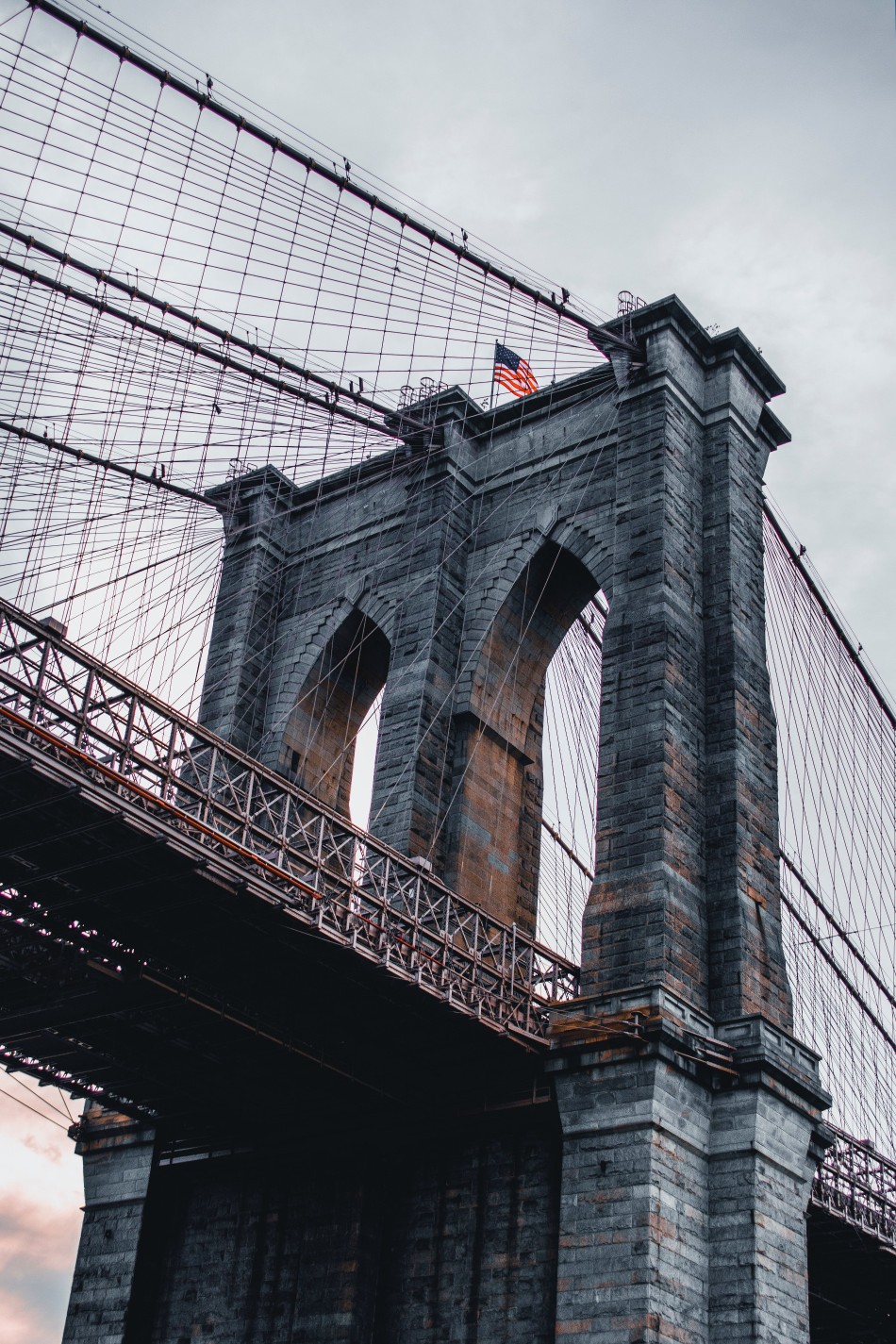
Explore the iconic Brooklyn Bridge Towers in New York, United States. Discover their Neo-Gothic architecture, engineering marvels, and rich history connecting Manhattan and Brooklyn.
<h2>Overview</h2><p>The Brooklyn Bridge Towers stand as monumental sentinels of one of New York City's most iconic landmarks, the Brooklyn Bridge. These majestic structures, rising prominently from the East River, are not merely functional components but also enduring symbols of 19th-century engineering prowess and architectural ambition. Built from a robust combination of limestone, granite, and cement, the towers anchor the world-renowned suspension bridge, gracefully connecting the boroughs of Manhattan and Brooklyn. They embody a striking Neo-Gothic style, characterized by their pointed arches that resemble cathedral windows, making them instantly recognizable globally. Serving as both the physical backbone and aesthetic highlight of the bridge, the towers draw countless visitors who marvel at their sheer scale and historical significance.</p><h2>History & Cultural Background</h2><p>The vision for the Brooklyn Bridge, including its imposing towers, originated with John A. Roebling, a pioneering civil engineer. Construction began in 1870, a monumental undertaking designed to span the challenging East River. Tragically, Roebling died early in the project due to an accident, leaving his son, Washington Roebling, to take over as chief engineer. The construction process was fraught with immense difficulties, notably the dangerous work within pneumatic caissons at the riverbed, which led to many workers suffering from 'caisson disease,' also known as 'the bends.' Washington Roebling himself was severely afflicted by this condition, leaving him bedridden and partially paralyzed. Undeterred, he continued to direct the project from his home, largely through his wife, Emily Warren Roebling, who became his indispensable liaison, mastering engineering details and communicating his instructions to the construction crews.</p><p>After 13 years of relentless effort and significant human cost, the Brooklyn Bridge officially opened on May 24, 1883. At the time, its main span of 1,595.5 feet was the longest in the world, and it was the first bridge to use steel for its cables, heralding a new era of construction. Its completion was celebrated as an extraordinary feat of engineering, symbolizing American ingenuity and progress. The towers, standing 276 feet tall, were among the tallest structures in New York City when completed.</p><h2>What Makes It Special</h2><p>The Brooklyn Bridge Towers are distinguished by their exceptional design and construction. Their Neo-Gothic architectural style, with massive stone blocks forming elegant, pointed arches, sets them apart from typical bridge supports. These arches serve as dramatic gateways, through which the bridge's roadways pass, creating a powerful visual impact. Beyond aesthetics, the towers are crucial to the bridge's innovative hybrid design, combining elements of both cable-stayed and suspension bridge types. They were built to withstand immense forces, with foundations sunk deep into the riverbed using cutting-edge caisson technology for the era. The towers support the four main cables, each nearly 16 inches in diameter and comprising thousands of galvanized steel wires, a revolutionary material choice for 19th-century bridge building. This combination of robust masonry and pioneering steel cable technology made the Brooklyn Bridge, and by extension its towers, an engineering marvel that pushed the boundaries of what was thought possible.</p><h2>Stories, Fun Facts & Local Details</h2><p>The history of the Brooklyn Bridge Towers is rich with captivating stories. One of the most famous involves Emily Warren Roebling, who, after her husband's debilitating illness, essentially managed the completion of the bridge. Upon its grand opening, she was granted the honor of being the first person to cross the bridge by carriage, famously carrying a rooster as a symbol of victory. Years later, in 1884, to quell public fears about the bridge's stability following a stampede accident, circus impresario P.T. Barnum led 21 elephants across the bridge, a spectacular publicity stunt that demonstrated its immense strength. The towers themselves were built with such confidence that wine cellars were originally incorporated into their massive masonry bases, providing naturally cool storage spaces for local merchants. The bridge and its towers have long been a source of inspiration, immortalized in countless works of art, literature, and film, serving as an enduring symbol of New York City's resilience and aspirational spirit.</p><h2>Visitor Perspective</h2><p>Visiting the Brooklyn Bridge Towers offers a profound experience, deeply connecting travelers to New York City's history and breathtaking skyline. The pedestrian walkway, elevated above the traffic, provides unparalleled views of Lower Manhattan, the Statue of Liberty, and the surrounding harbor. Many visitors choose to walk from the Brooklyn side towards Manhattan to fully appreciate the Manhattan skyline unfolding before them, particularly during sunrise or sunset. The sheer scale of the towers becomes truly apparent when walking beneath their majestic arches, offering a moment to reflect on the immense human effort and vision required for their construction. While often crowded, especially during peak tourist seasons, early mornings or late afternoons can offer a more serene experience. The access points are convenient, with entrances easily found in both Manhattan (near City Hall Park) and Brooklyn (Tillary Street/Adams Street or DUMBO). It's a journey that typically takes 25-40 minutes one way, allowing ample time for photographs and absorption of the panoramic vistas.</p>
Location
Coordinates: -73.9964, 40.7057
View on Google Maps