British Museum
London, United Kingdom

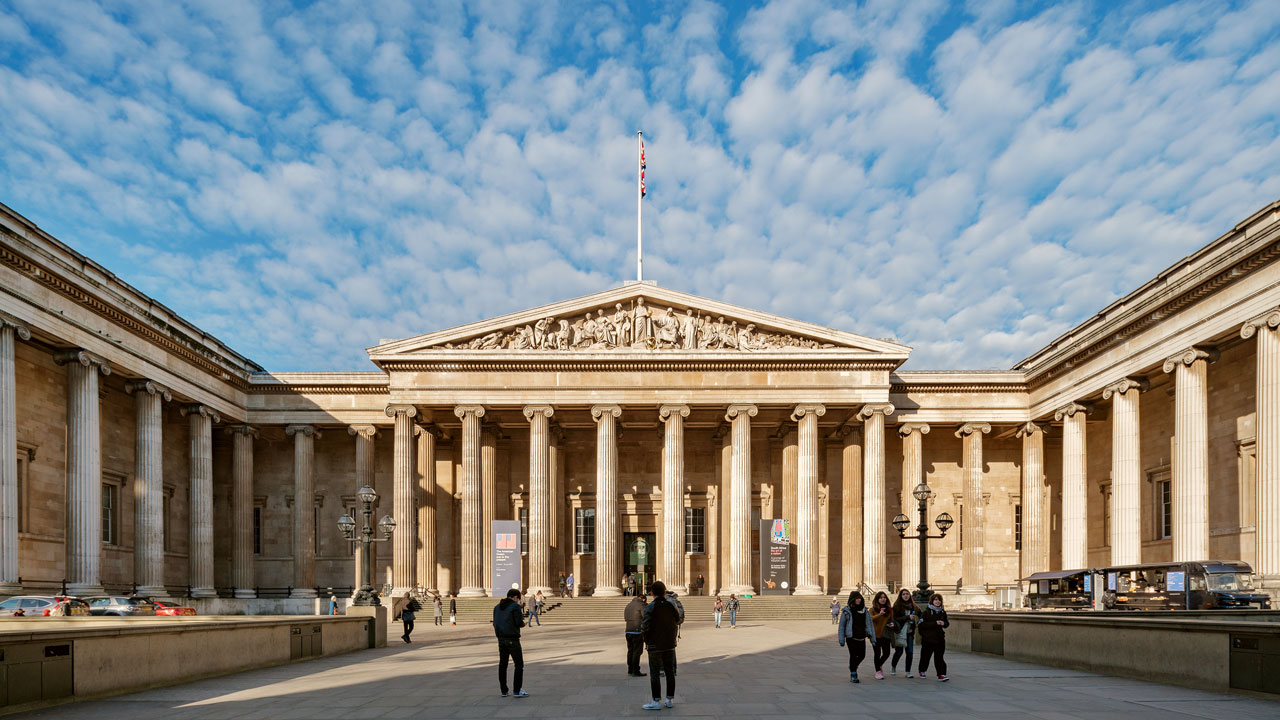
Explore the British Museum in London, UK – a world-renowned institution housing 8 million objects spanning two million years of human history.
<h2>Overview</h2><p>Stepping into the British Museum in London is like embarking on a journey across two million years of human history and culture. Nestled in the heart of Bloomsbury, this iconic institution is one of the world's oldest and most significant museums, boasting a collection of approximately eight million objects from every continent. Admission to its permanent galleries is famously free, making it an accessible treasure trove for curious minds and a cornerstone of London's cultural landscape.</p><p>The museum's grand neoclassical facade, designed by Robert Smirke, hints at the wonders within, leading visitors into the magnificent Great Court, a vast, glass-covered space that serves as a central hub and one of Europe's largest covered public squares. It is a place where diverse narratives of human endeavor converge, offering an unparalleled opportunity to explore the artistic, intellectual, and material achievements of civilizations past and present.</p><h2>History & Cultural Background</h2><p>The story of the British Museum began in 1753 with the bequest of Sir Hans Sloane, a physician, naturalist, and collector, who left his vast collection of some 71,000 artifacts, books, and natural history specimens to the British nation. This act led to Parliament's establishment of the museum, which opened its doors to the public in 1759 in Montagu House. It was the world's first public national museum, founded on the principle of being 'freely open to all studious and curious persons'.</p><p>As the British Empire expanded, so did the museum's collections, with objects arriving from across the globe through various means, including excavations, donations, and colonial activities. This rapid growth necessitated a larger home, resulting in the construction of the current neoclassical building between 1825 and 1857. Over time, some of the original collections, such as natural history specimens and books, evolved into independent institutions: the Natural History Museum and the British Library, respectively. Despite these separations, the British Museum has maintained its universal scope, continuing to document human culture from its beginnings to the modern day.</p><h2>What Makes It Special</h2><p>What truly sets the British Museum apart is the sheer depth and breadth of its collection, offering a 'universal' history of human culture. Visitors can witness some of humanity's most significant creations and discoveries under one roof.</p><ul><li><strong>The Rosetta Stone:</strong> This granodiorite stele, dating back to 196 BC, was the key that unlocked ancient Egyptian hieroglyphs, providing invaluable insights into a long-lost civilization. It remains one of the museum's most famous and visited objects.</li><li><strong>Parthenon Sculptures (Elgin Marbles):</strong> These exquisite marble sculptures, originally from the Parthenon in Athens, represent a high point of classical Greek art. Their presence in London has been a subject of ongoing debate and discussion, highlighting complex histories of acquisition.</li><li><strong>Egyptian Mummies:</strong> The museum houses one of the world's largest collections of ancient Egyptian artifacts outside Egypt, including remarkably preserved mummies and sarcophagi that offer a poignant glimpse into ancient burial practices and beliefs about the afterlife.</li><li><strong>Sutton Hoo Treasure:</strong> Discovered in a 7th-century ship burial in Suffolk, this collection, featuring a reconstructed helmet and elaborate metalwork, is one of the most important archaeological finds in British history, shedding light on Anglo-Saxon England.</li><li><strong>Winged Bulls (Lamassu):</strong> These monumental Assyrian sculptures, with human heads, eagle's wings, and bull or lion bodies, once guarded the entrances to ancient palaces in Mesopotamia, symbolizing protection and power.</li></ul><p>The museum's commitment to presenting a global narrative, from the earliest human-made tools to contemporary art, ensures that every visit is an exploration of interconnected histories.</p><h2>Stories, Fun Facts & Local Details</h2><p>Beyond its grand displays, the British Museum holds countless fascinating stories. The Rosetta Stone's decipherment in the early 19th century revolutionized Egyptology, making it perhaps 'the most famous piece of rock' in the world. The debate surrounding the Parthenon Sculptures continues to spark global conversations about cultural heritage and repatriation.</p><p>A lesser-known marvel is the Babylonian Map of the World, a cuneiform clay tablet dating to between the 8th and 6th centuries BCE, considered the first known map of the world and reflecting humanity's earliest attempts to graphically define their environment. The museum's vast collection includes unique items like the Lewis Chessmen, intricately carved walrus ivory pieces from the 12th century, and an extensive collection of coins and medals that tell miniature histories of the world.</p><p>For a period, the museum was even pranked by street artist Banksy, who managed to display one of his own pieces, 'Early Man Goes to Market,' within its Roman Britain collection, highlighting the museum's dynamic engagement with contemporary culture, even if unwittingly.</p><h2>Visitor Perspective</h2><p>Visiting the British Museum offers an immersive and enriching experience. While general admission to the permanent collection is free, it is highly recommended to book a timed entry ticket in advance online, especially during busy periods, to ensure priority access. The museum is open daily, typically from 10:00 to 17:00, with extended hours on Fridays.</p><p>Given its immense size and the eight million objects in its care, exploring the entire museum in a single visit is a challenge. Many visitors choose to focus on specific galleries or highlights. It is suggested to allocate at least 2-3 hours, though a full day could easily be spent wandering its halls. The museum is conveniently located in Bloomsbury, central London, easily accessible by public transport, with several Tube stations and bus routes nearby.</p>
Location
Coordinates: -0.126168, 51.518757
View on Google Maps